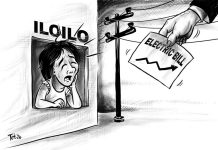




WHEN IT comes to renewable energy, Iloilo is proving that local governments do not need to wait for Manila to take the lead. With its forward-looking ordinances and concrete programs, the province is showing how local action can accelerate the national transition to clean energy — and how much faster the Philippines could reach its renewable targets if more provinces followed suit.
Consider Iloilo’s trailblazing measures: the Iloilo Provincial Ordinance on Renewable Energy (IPOR), which allocates one percent of the province’s budget to renewable initiatives; the I-SHARE program, which earmarks five percent of the Special Education Fund for school-based renewable projects to ease power costs; and the I-SIMPLE ordinance, designed to cut through the red tape that often delays energy infrastructure. These are systemic tools that align governance, financing, and community access with the broader goal of energy sustainability.
Iloilo was awarded the first-ever Sustainable Energy Award from the Department of Energy’s Renewable Energy Management Bureau, a recognition of its consistent efforts to implement renewable energy programs. More importantly, the province has attracted significant investments: from solar farms in Ajuy and Barotac Viejo to the massive 990 MW East Panay Offshore Wind Power Project. These developments not only diversify the energy mix but also promise jobs, economic growth, and greater resilience against volatile fossil fuel markets.
This should be a wake-up call for other provinces. National renewable targets — 35 percent by 2030 and 50 percent by 2040 — cannot be achieved by the Department of Energy alone. They require the active participation of LGUs, which are closest to communities and can craft policies that directly address local realities. Iloilo’s ordinances demonstrate how LGUs can institutionalize the energy transition, embed it into annual budgets, and make it part of everyday governance.
If Iloilo can do it, why can’t others?
Provinces with untapped wind corridors, abundant rivers, or fertile plains for solar farms should be crafting their own ordinances to harness these resources. Waiting for national government intervention is a recipe for delay. The energy transition is urgent, and the cost of inaction is steep: continued dependence on imported coal and oil, rising power costs, and worsening climate risks.
The Philippines cannot afford to treat renewable energy as a distant goal. Iloilo’s example proves that with political will, creativity, and localized policymaking, the shift to renewables can move faster — and deliver benefits sooner. Other LGUs must step up, follow Iloilo’s lead, and become true catalysts in the country’s energy transformation.