

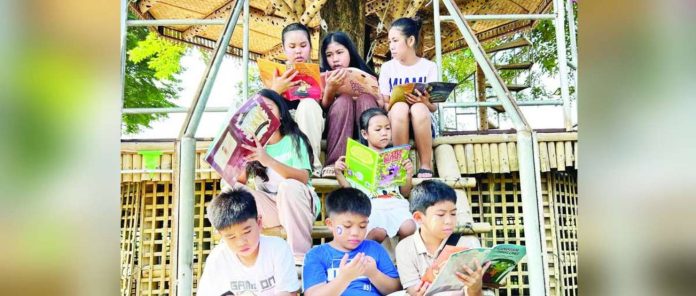
CAPIZ — Despite the growing popularity of artificial intelligence (AI) and digital technology, the Capiz Provincial Library (CPL) and Book Nook continues to promote physical books and inclusive learning, emphasizing that libraries remain irreplaceable sources of knowledge and community interaction.
Maria Yvette Andion, officer-in-charge of the CPL, described libraries as the original data centers, providing access to information while encouraging critical thinking, imagination, and meaningful human connections.
While AI offers quick and convenient access to information, Andion said it cannot replicate the experience of reading physical books or the personal interactions that libraries foster.
“Critical thinking is facilitated by reading to effect change starting from myself, my family, and my community. Books bring me to places that I dream of. Interaction among persons happens in the library, not with AI. AI is ideal. Persons are relational,” Andion told Panay News.
She stressed that physical books allow readers to revisit pages, explore information at their own pace, and better engage with what they read.
Bringing books to communities
Beyond providing reading materials, the CPL conducts literacy outreach activities in schools and communities, including far-flung barangays where access to books remains limited.
During an outreach activity at Guinotos Elementary School in Dumarao, Andion recalled how children eagerly welcomed physical picture books and storybooks, which were rarely available in their community.
During the COVID-19 pandemic, storybooks downloaded from YouTube were printed for classroom use. However, bringing actual books directly to the children offered a different and more engaging reading experience.
At Cuartero National High School, particularly its Special Program in the Arts, students also expressed amazement at storybooks featuring Filipino authors and familiar settings.
Meanwhile, during the Tourism Expo 2026 at Robinsons Roxas City, a 16-year-old girl enthusiastically explored storybooks, sharing that she had long wanted to read such materials but had never owned even one because of life’s hardships.
For Andion, these experiences underscore the importance of making knowledge accessible to everyone, regardless of economic circumstances or location.
“The library is the depository of knowledge, especially in discovering our local history and appreciating who we are now,” she said.
Encouraging reading habits
Andion also urged younger generations to rediscover physical books as a way to strengthen literacy, comprehension, and attention spans amid increasing screen time and rapid digital consumption.
“Reading a physical book takes more muscles to hold it, flip the pages and to vividly imagine what’s going on,” she said.
She encouraged families to make reading a shared activity, emphasizing the importance of understanding and critically examining information rather than simply consuming digital content.
“Drop the digital technology, pick a book and read with critical thinking; comprehend what’s you’re reading to overcome the literacy crisis and counterattack the short attention span and short-term memory by reading a book with a family member,” Andion added.
Through its programs, the CPL and Book Nook continues to advocate for inclusive learning and the enduring value of printed materials, particularly for children and communities with limited access to educational resources.
The Capiz Provincial Library is located on the third floor, Room 1, of the Capiz Government and Business Center, beside the Book Nook./PN