



WESTERN Visayas has earned something worth celebrating: it emerged as the fastest-growing regional economy in the Philippines in 2025, expanding by 6.4 percent to P683.44 billion. More significantly, poverty incidence among families plunged from 9.8 percent in 2023 to 5.2 percent in 2025. Those two figures, as reported by this paper yesterday, together tell a far more important story than economic growth alone. Growth is impressive. Growth accompanied by falling poverty is meaningful.
As Department of Economy, Planning, and Development (DEVDep) Region 6 director Engr. Arecio Casing rightly pointed out, Western Visayas does not want an economy posting high growth while leaving poverty stubbornly high. The objective must be growth that reaches the lowest levels of society. That should now become the region’s development test.
The challenge is to ensure that Western Visayas does not become a victim of its own impressive statistics — a region that looks prosperous on economic charts while communities on the ground continue struggling with inadequate jobs, poor infrastructure, agricultural vulnerability and unequal access to opportunities.
There is already reason for caution. The services sector accounts for 66.5 percent of the regional economy, with its gross value added increasing from P427.29 billion in 2024 to P454.19 billion in 2025. Tourism, information technology-business process outsourcing and other service industries are powering much of this expansion.
This is good news, but it also exposes a fundamental development challenge.
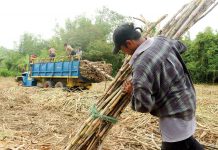
An economy heavily driven by services must make sure that farmers, fisherfolk, rural workers, small entrepreneurs and geographically isolated communities are not merely spectators to prosperity happening elsewhere.
The gleaming offices of Iloilo City, the tourism economy of Boracay and Guimaras, and expanding commercial centers can generate enormous wealth. But economic progress must ultimately be measured by what happens in households far removed from these growth engines.
Does the farmer earn more? Does the fisherman have a more secure livelihood? Can young people find decent-paying jobs without leaving their communities? Can families afford nutritious food, healthcare and education? Can small businesses participate in the expanding economy? These are the questions behind the statistics.
DEPDev-6 itself acknowledges that serious development gaps remain. Poverty and inequality still affect vulnerable communities. Agriculture remains threatened by climate risks and weather disturbances, while food security, nutrition, infrastructure deficiencies and human-capital constraints continue to pose structural challenges. That admission should prevent government from becoming complacent.
A 6.4-percent growth rate is not a finish line. Neither is a 5.2-percent family poverty rate. They are opportunities. Western Visayas now has the economic momentum to tackle the harder problems that headline growth figures can sometimes conceal. Agriculture must become more productive and resilient. Infrastructure investments must extend beyond major cities and commercial corridors. Digital connectivity must reach rural communities. Education and skills development must prepare workers not only for today’s jobs but for an economy increasingly shaped by artificial intelligence, automation and other emerging technologies.
Most importantly, the region must create quality jobs, not simply more economic activity. Growth means little to a worker whose wages cannot keep pace with living costs. Tourism numbers mean little to communities that remain poor beside successful destinations. Investments mean little if their benefits become concentrated among those who already possess capital and opportunity.
Western Visayas has demonstrated that rapid economic growth and poverty reduction can happen simultaneously. The next task is considerably harder: making prosperity durable, geographically balanced and broadly shared.
Western Visayas has reached the top of the country’s regional growth table. The greater achievement will be ensuring that as the regional economy climbs, no Ilonggo, Aklanon, Antiqueño, Capiznon or Guimarasnon is condemned to watch that prosperity from the sidelines.