



MANILA — President Ferdinand “Bongbong” Marcos Jr. wants the government to respond firmly — but through diplomatic channels — amid the escalating exchange of statements between Philippine and Chinese officials over the West Philippine Sea (WPS), Malacañang said.
Palace Press Officer Claire Castro said the President is aware of the growing tension, which has prompted some lawmakers to call for certain Chinese diplomats to be declared persona non grata following public remarks critical of Philippine officials.
Castro relayed that the administration is aligning with the position of the Department of Foreign Affairs (DFA), which earlier cautioned that declaring foreign envoys unwelcome is among the most serious diplomatic measures and should only be considered as a last resort.
DFA stressed it remains committed to resolving disputes through dialogue and confirmed that it is in direct communication with the Chinese government on issues affecting bilateral relations.
“It is hoped that the DFA would be provided with ample space to perform its functions and to sort out issues with foreign counterparts through dialogue and consultation rather than through public discourse in accordance with the President’s vision and guidance as the architect of Philippine foreign policy,” the DFA said in a statement read by Castro.
Asked to clarify the President’s position, Castro said Marcos believes the government can assert its rights without abandoning diplomacy.
“Puwede naman pong magkaroon ng firm action with diplomacy,” she said.
In recent weeks, the Chinese Embassy and several Philippine officials have traded sharp statements, with Beijing taking aim at Philippine Coast Guard spokesperson Commodore Jay Tarriela and legislators who have been vocal about Chinese activities in disputed waters.
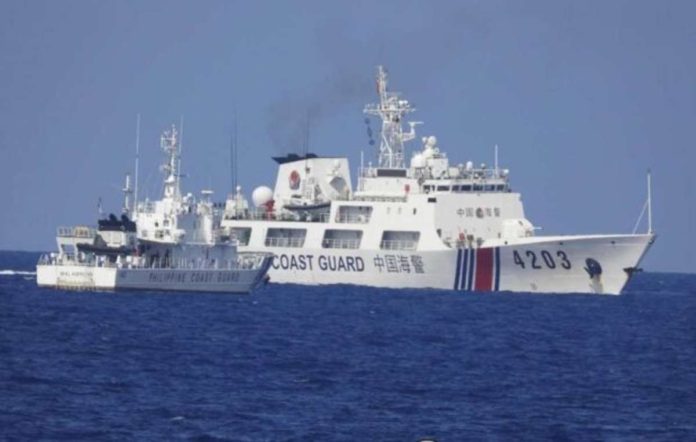
The Philippines has repeatedly accused China of aggressive maritime actions, including water cannoning and interference with resupply missions within the country’s exclusive economic zone (EEZ). China, for its part, continues to claim large portions of the South China Sea, including areas covered by the Philippines’ EEZ.
Manila anchors its position on the 1982 United Nations Convention on the Law of the Sea (UNCLOS) and the 2016 arbitral ruling that invalidated China’s expansive maritime claims./PN