


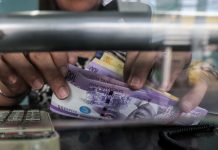
MANILA — Filipinos face the prospect of higher fuel, food and other commodity prices after the Philippine peso plunged to a historic low of P64.17 against the US dollar, prompting President Ferdinand Marcos Jr. to assure the public that the government has sufficient resources to defend the weakening currency.
The peso’s record depreciation has heightened concerns over its impact on consumer prices, particularly in a country heavily dependent on imported petroleum products, agricultural commodities and industrial raw materials.
Speaking to reporters during a visit to the New Bilibid Prison in Muntinlupa City, Marcos sought to calm fears over the currency’s continued decline, insisting that the government has the necessary financial tools to prevent further depreciation.
“First of all, do not take it with alarm. Don’t panic,” Marcos Jr. said.
The President pointed to the country’s healthy foreign exchange reserves as a crucial safeguard against mounting pressure on the peso.
“People can take solace in the fact that our policy towards the peso is to continue to defend the peso as hard as we possibly can. We have all the tools to defend the peso… With that in mind, we will continue to do all we can to make sure that the value of the peso does not continue to go down,” he added.
The weakening currency poses a particular challenge to the administration’s efforts to contain inflation, as a stronger dollar makes imported goods more expensive in peso terms.
Higher import costs could eventually translate into increased pump prices, transportation expenses and production costs, potentially squeezing household budgets and eroding consumers’ purchasing power.
The Philippines is especially vulnerable to fluctuations in global oil prices because of its heavy reliance on imported fuel, making the combination of a depreciating peso and expensive petroleum a significant inflationary risk.
Marcos acknowledged that external factors, particularly international oil prices, remain largely beyond the government’s control.
Asked how his administration intends to cushion consumers against rising prices, the President said inflationary pressures were primarily linked to supply constraints rather than factors that monetary policy alone could address.
“We have to do other ways. It’s basically oil we can do nothing about. Food, we can,” Marcos said.
He stressed that while the government has limited influence over global petroleum prices, it can intervene more directly in domestic food supply and pricing.
“And we are doing, again, everything that we can to make sure that the prices of food come down,” he said.
The peso’s historic decline presents a difficult balancing act for economic policymakers, who must contend with currency volatility, imported inflation and the need to sustain economic activity.
Although a weaker peso can benefit exporters and overseas Filipino workers whose dollar earnings translate into more pesos, these gains may be offset by higher costs of imported goods and services.
For ordinary consumers, the immediate concern is whether the peso’s continued depreciation will trigger another round of price increases, adding to the financial strain on households already struggling with the cost of basic necessities.
Marcos maintained that the administration would continue using available measures to support the currency while pursuing initiatives to stabilize food prices and protect consumers from further inflationary pressures./PN