



By ADRIAN STEWART CO
MANILA — With heavy rains forecast over Albay and neighboring provinces, authorities warned Wednesday that rain-triggered lahar flows, not eruptive activity, could pose the most immediate danger around Mayon Volcano, which remains under Alert Level 3 due to intensified unrest.
The Philippine Atmospheric, Geophysical and Astronomical Services Administration (PAGASA) said Albay, Camarines Sur, Catanduanes, and Sorsogon could receive 50 to 100 millimeters of rainfall, enough to remobilize loose volcanic debris and trigger fast-moving mudflows along gullies and river channels draining Mayon.
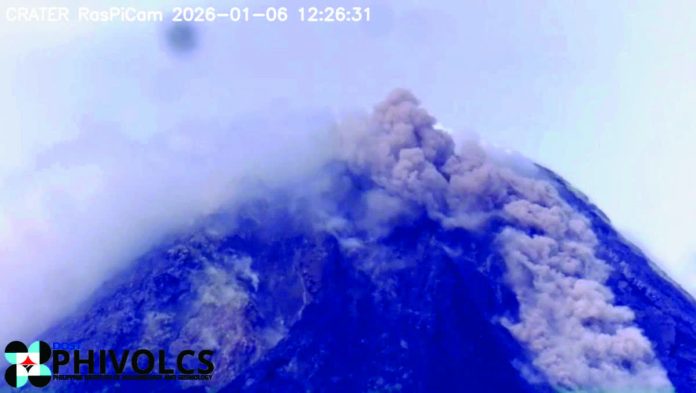
The rainfall advisory comes as Philippine Institute of Volcanology and Seismology (Phivolcs) confirmed that Mayon continues to show magmatic activity, including dome collapse and pyroclastic density currents, locally known as “uson,” prompting the upgrade to Alert Level 3 from Alert Level 2 on Tuesday.
Phivolcs reiterated that hazards under the current alert include lava flows, lava fountaining, ballistic fragments, pyroclastic density currents, moderate explosions, and lahar flows, with the latter becoming more likely during prolonged or intense rainfall.
Authorities stressed that lahar risks are highest in channels and waterways where ash and fragmented lava from recent activity have accumulated. The Department of the Interior and Local Government (DILG) earlier urged communities near these drainage systems to remain vigilant, warning that sudden downpours could rapidly mobilize volcanic materials.
Evacuations are continuing in Albay, particularly within the six-kilometer danger zone, where residents have been ordered to leave high-risk areas and transferred to evacuation centers as a precaution.
Officials said contingency planning is in place should conditions worsen, noting that a possible escalation to Alert Level 4 would necessitate the evacuation of a much larger population.
Meanwhile, the Department of Tourism (DOT) – Bicol Region reminded travelers to strictly observe safety protocols, monitor flight schedules, carry medical-grade face masks in case of ashfall, and avoid entering the permanent danger zone. Tourism authorities said designated viewing areas outside restricted zones will be identified so visitors can safely view Mayon, which often draws crowds during periods of visible activity./PN