



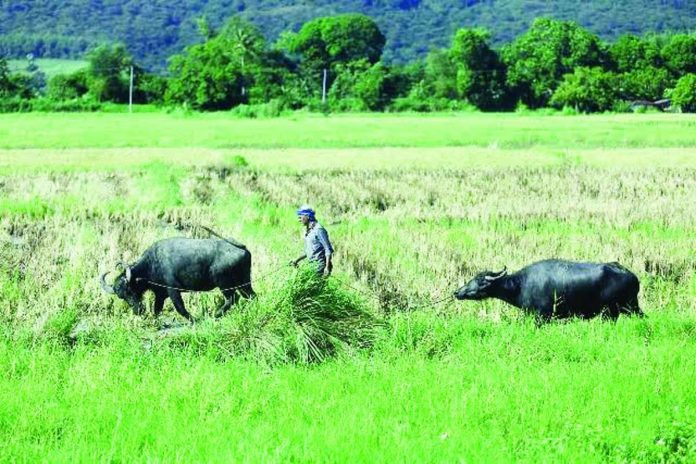
MILLET, a group of small-seeded cereal grasses, is being eyed as a substitute for corn feed for animals to lower livestock production costs, the Department of Agriculture (DA) said.
The DA said that millet can thrive even in dry conditions unlike corn that requires more water.
“Corn is a major feed ingredient, so disruptions in production can translate into higher input costs,” the department said in a statement.
“Developing other feed sources could give farmers and feed manufacturers more flexibility, although commercial adoption would still depend on yield, nutritional value, processing requirements and cost,” it added.
The idea came following DA Secretary Francisco Tiu-Laurel Jr.’s visit to India, wherein the Philippines import a large number of buffalo meat.
The DA is currently working to expand the domestic carabao and dairy industries.
The Philippine Carabao Center (PCC) recently launched in Nueva Ecija the world’s first laboratory dedicated to sex-sorting buffalo semen.
“Breeders can therefore target female offspring for dairy production or males for meat and draught work. The sorted semen is cryogenically preserved for artificial insemination programs nationwide,” the DA said.
Producing sex-sorted semen locally can lower purchasing costs, minimize the risk of importing livestock diseases, and yield breeding material better suited to the Philippine environment, the department noted. (GMA News)