


[av_one_full first min_height=” vertical_alignment=” space=” custom_margin=” margin=’0px’ padding=’0px’ border=” border_color=” radius=’0px’ background_color=” src=” background_position=’top left’ background_repeat=’no-repeat’ animation=”]
[av_heading heading=’Next security police challenge: Jaro fiesta’ tag=’h3′ style=’blockquote modern-quote’ size=” subheading_active=’subheading_below’ subheading_size=’15’ padding=’10’ color=” custom_font=” av-medium-font-size-title=” av-small-font-size-title=” av-mini-font-size-title=” av-medium-font-size=” av-small-font-size=” av-mini-font-size=” admin_preview_bg=”]
BY RUBY P. SILUBRICO
[/av_heading]
[av_textblock size=” font_color=” color=” av-medium-font-size=” av-small-font-size=” av-mini-font-size=” admin_preview_bg=”]
February 1, 2018
[/av_textblock]
[av_textblock size=” font_color=” color=” av-medium-font-size=” av-small-font-size=” av-mini-font-size=” admin_preview_bg=”]
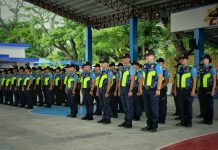
ILOILO City – The Iloilo City Police Office (ICPO) is mobilizing 300 policemen to keep tomorrow’s fiesta of Jaro district peaceful and orderly.
The fiesta is one of the biggest in the country. Thousands of devotees of Nuestra Señora de la Candelaria (Our Lady of Candles) from across the land gather at the century-old Jaro Metropolitan Cathedral for a series of masses and at Jaro Plaza for the Jaro Agro-Industrial and Charity Fair.
Jaro fiesta also draws affluent cockfighting enthusiasts even from abroad. The famous Candelaria cock derby is being held at the Iloilo Coliseum in Barangay San Isidro, Jaro.
“We are making sure we have enough men to secure people,” said Senior Inspector Shella Mae Sangrines, spokesperson of the Iloilo City Police Office (ICPO).
Policemen from five other districts of the city (La Paz, Mandurriao, City Proper, Molo, and Arevalo) would also be momentarily posted in Jaro.
Barangay tanods and officials would serve as force multipliers of the police.
“Policemen can’t possibly cover all areas of Jaro district. Force multipliers are very helpful in our effort to maintain peace and order,” said Sangrines.
Jaro’s original name was Salog or Saro. It had been one of the more economically-advanced areas of Iloilo City even during the Spanish occupation of the Philippines and probably the richest town of the entire colony (1521-1898).
Historical artifacts indicated that the town had once conducted trade with China and Siam (Thailand) due to its port along the navigable river that ran through the town.
It was also the center of religious and economic power in the Visayas during the Spanish rule of the Philippines.
Jaro officially became a city in 1886 until it was absorbed by the city of Iloilo along with the neighboring towns of Molo, Mandurriao, La Paz and Arevalo in the early 20th century when all economic activities were shifted to the port of Iloilo.
Located between Dungon Creek and the Jaro River, the district of Jaro fulfills the ideal design for establishing communities during that era: a site between two rivers, with a church and plaza in the center, and homes of affluent families in the vicinity.
The cathedral of the Parish of Our Lady of Candles is the headquarters of the Archdiocese of Jaro and the site of a miraculous statue of the Virgin Mary; the representation of such was beatified by Pope John Paul II in 1982.
The district is also notable for its large amount of 19th century architecture.
Jaro is also the hometown of hero Graciano Lopez Jaena who, along with national hero Dr. Jose Rizal, established the Propaganda Movement against the Spanish regime./PN
[/av_textblock]
[/av_one_full]