




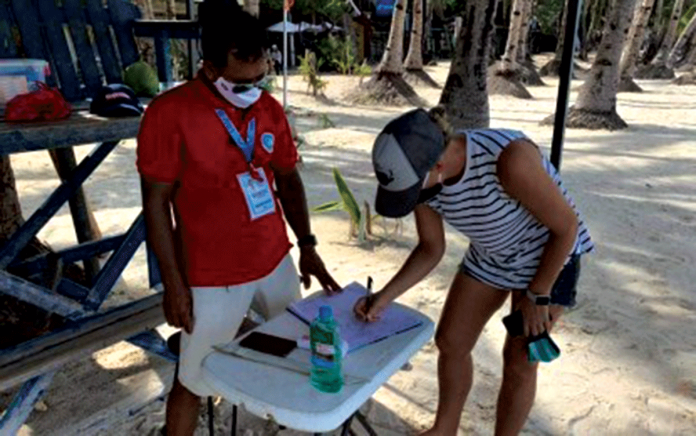
ILOILO – Beach resorts, swimming pools and other water recreational facilities across Iloilo Province must now employ certified lifeguards and maintain lifesaving equipment or risk fines, imprisonment and the suspension or revocation of their business permits.
The Sangguniang Panlalawigan (SP) unanimously approved Provincial Ordinance No. 2026-362, or the Water Safety and Lifeguarding Ordinance of the Province of Iloilo, which imposes stricter safety, emergency-response, sanitation and water-quality standards on beach and inland resorts, public and subdivision pools, water parks and similar facilities.
It seeks to significantly reduce, if not eliminate, preventable drowning and other water-related accidents amid the continued expansion of tourism, hospitality and residential developments in the province.
“Drowning is the third leading cause of unintentional injury death worldwide, and the Philippines is one of the countries with a high incidence of drowning which attributed to the absence of trained emergency personnel, lack of adequate lifesaving tools, or insufficient supervision by the operators of beach resorts, inland resorts and other similar water recreational facilities,” the ordinance stated.
Under the measure – authored by 2nd District Provincial Board member June Mondejar who chairs the SP Committee on Public Order and Security – covered establishments cannot operate without a sanitary permit from the local government unit where they are located.
Local sanitary inspectors may coordinate with the Department of Health (DOH) and the Department of Environment and Natural Resources (DENR) before a permit is issued.
The establishments must employ a sufficient number of lifeguards holding valid certificates from the Philippine Coast Guard (PCG), Philippine Red Cross or a PCG-accredited organization or institution.
Lifeguards must remain at strategic observation points throughout operating hours and wear prescribed uniforms or high-visibility vests marked “LIFEGUARD.”
Those on duty are prohibited from performing secondary tasks such as ticketing, bartending and cleaning that could distract them from monitoring swimmers.
Facilities must also provide functional rescue and emergency equipment, including first-aid kits, automated external defibrillators, airway-management tools, rescue tubes, spine boards, ring buoys, life jackets and communication devices.
An adequate number of buoys must be properly positioned to mark safe swimming areas.
Life jackets must be made available free of charge, particularly to children and non-swimmers.
Each establishment must submit a comprehensive written Emergency Response Plan to its city or municipal disaster risk reduction and management office when applying for or renewing a business permit.
The ordinance also requires facilities to comply with DOH water-quality and chemical-balance standards. Pool operators must conduct regular water tests and keep a logbook accessible to health officers and authorized sanitary inspectors.
To oversee implementation, the ordinance creates the Provincial Water Safety and Lifeguarding Task Force chaired by the governor or an authorized representative, with the provincial health officer serving as vice chairperson.
Its members include the provincial disaster risk reduction and management officer, PCG station commander, provincial tourism officer, provincial legal officer and Philippine Red Cross-Iloilo Chapter administrator.
City and municipal governments are required to enforce the ordinance within their respective jurisdictions.
Violators face a P3,000 fine for the first offense.
A second offense carries a P4,000 fine, imprisonment of up to seven days, or both, at the court’s discretion, without prejudice to the suspension of the establishment’s business permit for up to 30 days.
A third offense is punishable by a P5,000 fine, imprisonment of up to 15 days, or both, without prejudice to the revocation of the business permit.
The measure – approved during its 54th regular session presided over by Vice Gov. Nathalie Ann Debuque on Tuesday afternoon, July 28 – complements the Iloilo Provincial Health Office’s recently launched Drowning Prevention Program, which promotes water safety and seeks to reduce drowning incidents across the province./PN