


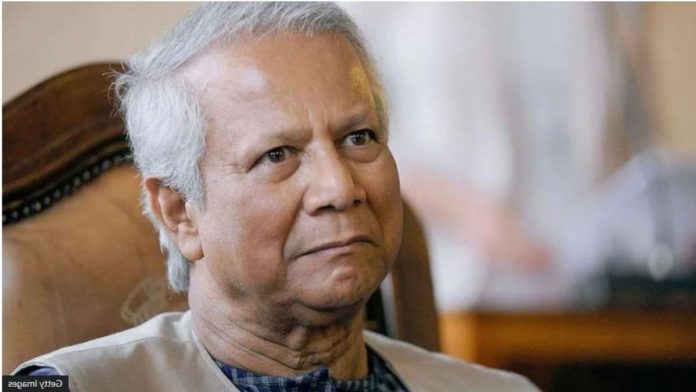
DHAKA – Nobel laureate Muhammad Yunus – a longtime political foe of Bangladesh’s ousted prime minister Sheikh Hasina – has been named the country’s interim leader.
The 84-year-old was appointed a day after Hasina fled the country following weeks of deadly protests that brought her resignation.
While Professor Yunus has been lauded for his pioneering use of microloans, Hasina regarded him as a public enemy – he is currently on bail, appealing against a six-month jail term in what he has called a politically-motivated case.
Students who led the mass protests that unseated Hasina refused to accept a military-led government and pushed for Yunus to lead the interim administration.
In 1983, he started Grameen Bank, which offers micro, long-term loans to help poor people start small businesses – a concept that has since taken off around the world.
He was accused of tax evasion and serving at Grameen Bank beyond the mandatory retirement age, which led to him being sacked – but Yunus maintained that these were baseless charges.
He, along with the bank, was awarded the Nobel Peace Prize in 2006 for showing that “even the poorest of the poor can work to bring about their own development”.
He became known internationally as the “banker to the poor”, but Hasina called him a “bloodsucker” of the poor and accused his bank of charging exorbitant interest rates.
It was never clear what was the origin of the feud with Hasina, but many believe it was his unsuccessful efforts to set up a political party.
The decision to name Yunus as chief adviser of the interim government followed a meeting between President Mohammed Shahabuddin, military leaders and student leaders.
“When the students who sacrificed so much are requesting me to step in at this difficult juncture, how can I refuse?” Yunus had said.
He is returning to Dhaka from Paris where he is undergoing a minor medical procedure, his spokesperson said.
The protests in Bangladesh began in early July with demands from university students to abolish quotas in civil service jobs, but snowballed into a broader anti-government movement.
In all, more than 400 people are reported to have died in clashes between government forces and protesters – mostly civilians shot by police.
On Monday alone, more than 100 people died across the country, making it the single deadliest day in the movement. Hundreds of police stations were also torched.
Hours before protesters stormed and looted the former Prime Minister’s official residence in the capital Dhaka, Hasina resigned and fled to neighboring India. That brought a swift and abrupt end to her nearly 15-year rule.
Even as Bangladesh’s economy grew in the past decade, the former prime minister came under increasing criticism for silencing her critics and jailing her political opponents.
Some of them, such as ex-prime minister Khaleda Zia and activist Ahmad Bin Quasem, were released soon after Hasina’s hasty exit.
Zia chairs the main opposition Bangladesh Nationalist Party, which boycotted elections in 2014 and again in 2024, saying free and fair polls were not possible under Ms Hasina.
The 78-year-old was imprisoned in 2018 for corruption – charges, she said, were politically motivated.
Rights groups say Quasem was detained in 2016, one of hundreds of forced disappearances during Hasina’s tenure.
Yunus, who was sentenced to six months in jail in January for violating labor laws, has said he too was a victim of Hasina’s ire.
He has faced other allegations in the past, going back to 2011 when he was accused of defaming Bangladesh’s politicians. (BBC)