

MANILA – The Office of the Ombudsman has ordered several government officials to answer the criminal and administrative allegations against them over the arrest of former President Rodrigo Duterte in March.
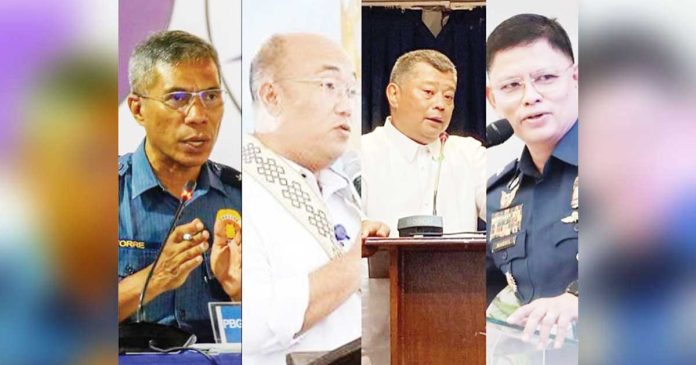
The Ombudsman directed Justice Secretary Jesus Crispin Remulla, Interior Secretary Jonvic Remulla, Philippine National Police (PNP) chief Rommel Marbil, Special Envoy on Transnational Crime Markus Lacanilao and Criminal Investigation and Detection Group’s Police Major Gen. Nicolas Torre, among other officials, to answer the allegations of arbitrary detention, usurpation of judicial functions, usurpation of authority or official functions, and false testimony.
This was based on the chairperson’s report of the Senate Committee on Foreign Relations that Sen. Imee Marcos sent to the Ombudsman last week.
In another order, the officials were also told to answer the complaint for grave misconduct and conduct prejudicial to the best interest of the service.
“Failure to file Counter-Affidavit within the aforesaid period shall be deemed as waiver of respondents’ right to submit controverting evidence and the preliminary investigation shall proceed accordingly,” the Ombudsman order dated May 6 stated.
The Senate committee, led by Senator Marcos, has put forth recommendations for criminal charges against officials, including arbitrary detention, serious threats, usurpation of judicial authority, providing false testimony, and perjury.
In contrast, the administrative complaints cite serious misconduct and actions detrimental to the service’s best interests.
Based on an arrest warrant from the International Criminal Court (ICC) in The Hague, Duterte was apprehended on March 11 at NAIA immediately upon his return from Hong Kong, facing accusations of crimes against humanity linked to the numerous fatalities resulting from his anti-drug campaign.
Republic Act 9851, which addresses Crimes against International Humanitarian Law, Genocide, and Crimes Against Humanity, permits the Philippine government to postpone investigations into alleged crimes against humanity in favor of an international court that is already examining the matter.
Furthermore, a Supreme Court decision from July 2021 requires the Philippine government to assist in ICC proceedings, provided that the alleged offenses occurred while the Philippines was still a signatory to the ICC.
Under Duterte’s presidency, the Philippines declared its exit from the Rome Statute, which established the ICC, on March 14, 2018, with the withdrawal becoming effective a year later on March 14, 2019./PN