



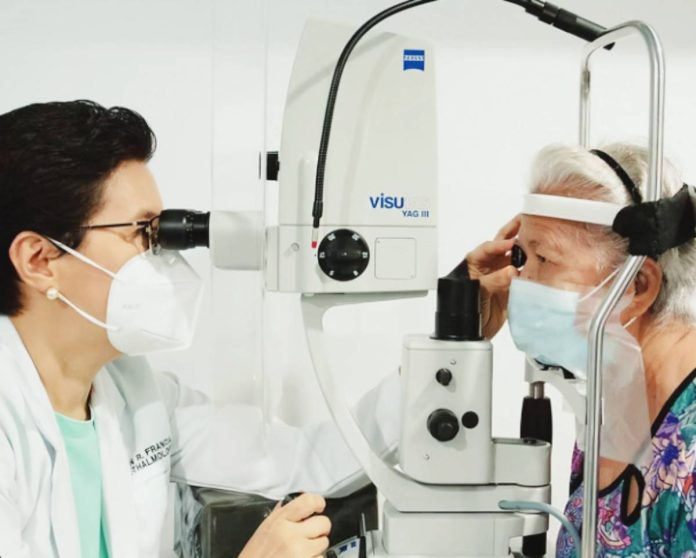
ILOILO City — As more patients seek treatment for eye diseases, the Western Visayas Medical Center (WVMC) in Mandurriao district here has raised concern over widespread confusion between ophthalmologists and optometrists — two distinct but complementary professions in eye care.
“Vision is essential to our daily lives and overall well-being,” emphasized Dr. Mary Katherine Francia, chief of the Department of Ophthalmology at WVMC, as she urged the public to understand the difference to ensure proper treatment.
An ophthalmologist, she explained, is a medical doctor who has undergone around 12 years of rigorous training — four years of undergraduate studies, four years in medical school, a one-year post-graduate internship, and a minimum of three years of specialized residency in ophthalmology.
“Ophthalmologists are fully qualified to perform surgical procedures, administer laser treatments, and diagnose an array of eye diseases,” Francia said.
In contrast, an optometrist completes a college degree followed by specialized training in optometry. They are not medical doctors, but they can prescribe corrective lenses, conduct eye exams, and manage some eye conditions.
“Optometrists can prescribe certain medications and provide managed care for various eye conditions. However, it’s important to note that in the Philippines, the specific regulations governing their ability to prescribe various treatment options may vary, so this should be confirmed,” she noted.
While optometrists are invaluable for routine eye care, Francia stressed that “for surgical needs or complex medical management, an ophthalmologist’s expertise is essential.”
WVMC treats a wide range of eye conditions — from cataracts and glaucoma to diabetic retinopathy and trauma-related injuries, particularly those from road accidents that are common among young males. For these conditions, Francia underscored the need for proper medical and surgical care only ophthalmologists can provide.
Optometrists, meanwhile, remain vital in diagnosing refractive errors such as nearsightedness, farsightedness, and astigmatism, and in prescribing eyeglasses, contact lenses, and other low-vision aids.
“Owing to these respective focuses, ophthalmologists tend to concentrate on surgical and specialized medical eye care, while optometrists typically handle routine vision exams, corrective lenses prescriptions, and basic eye health assessments,” Francia explained.
She emphasized that both fields must coexist and collaborate. Optometrists often provide the first line of care, while ophthalmologists step in for advanced treatments. Together, they ensure patients receive the right level of attention — whether for routine exams or sight-saving surgery./PN