


ILOILO City – Tuberculosis (TB) remains a silent and persistent health problem in Western Visayas, with estimated cases soaring to over 22,000 in 2023 — far outpacing actual notifications — prompting the Philippine Tuberculosis Society, Inc. (PTSI) to ramp up its campaign for free chest X-ray screenings, particularly in underserved areas.
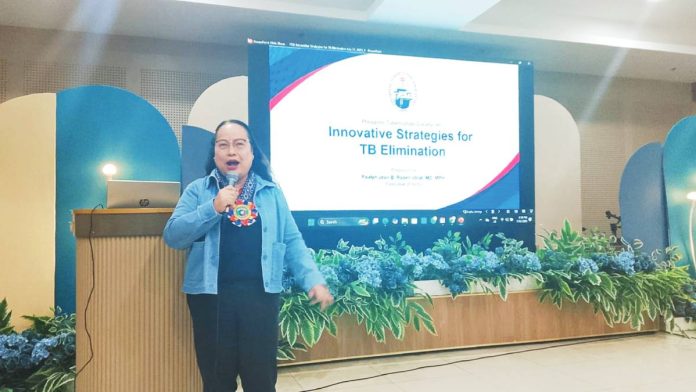
But fighting TB stigma is just as vital as medical treatment, stressed former Department of Health (DOH) secretary Dr. Paulyn Jean Roselle Ubial, now the executive director of PTSI.
“We need to spread the good news that there is treatment,” she said during a media conference here organized by DOH Region 6 on July 31.
People are afraid to seek help, said Ubial, because they fear judgment and discrimination, not just in the community, but even from family members.
“That fear prevents them from completing treatment or even getting diagnosed,” she lamented.
TB is a contagious bacterial infection caused by Mycobacterium tuberculosis, which primarily affects the lungs but can also impact other parts of the body. It spreads through airborne droplets when a person with active TB of the lungs coughs, sneezes, or talks.
While TB is curable, it requires strict and prolonged treatment. Prevention includes early detection, regular screening, completing treatment regimens, and avoiding close contact with people who are infected.
Ubial said early detection is critical to addressing the country’s longstanding TB problem.
“We are number one in Southeast Asia, and number four in the world in terms of TB burden. That means we are among the countries with the highest number of TB cases. India is number one, followed by China, Indonesia, and then the Philippines,” said Ubial.
She emphasized the importance of routine screenings, recommending that all Filipino adults undergo a chest X-ray every two years to catch both symptomatic and asymptomatic cases.
“The number one challenge we face is that because TB treatment takes so long, patients don’t complete it. Treatment lasts six months, and for multi-drug resistant cases, it can stretch to 12 months or more. That’s why TB remains — it’s hard to cure and takes a long time,” she added.
PTSI’s 2023 data reveals a significant detection gap in the region. In Iloilo province, 13,277 cases were estimated, but only 8,964 were notified. Capiz had 5,218 estimated cases with just 4,012 reported, while Guimaras reported only 694 out of an estimated 1,221. Iloilo City recorded 2,946 estimated cases.
The figures also reflect poor coverage of preventive treatment. Only 69 people received TB preventive treatment in Capiz, followed by 124 in Iloilo province, 56 in Iloilo City, and just eight in Guimaras.
“Only 19% of those with symptoms go for check-up. Our TB preventive treatment coverage is very low. We cannot attain elimination if we only treat active and latent cases — those with symptoms or those with chest X-ray findings. There are asymptomatic TB cases that still show infection in X-ray. We will never eliminate TB if we only focus on treating the sick,” Ubial said.
She underscored the need to go beyond treatment and address underlying risk factors while also combating stigma that continues to prevent people from seeking help.
“Now, to bring it down to less than one per 100,000 population — that’s the level where we can say TB is eliminated. It’s not eradicated, because TB will never be completely gone. Unlike rabies and polio, which can be eradicated, for tuberculosis our goal is only elimination,” she explained.
While the global target is to eliminate both active and latent TB by 2030, the Philippines is likely to miss that mark, Ubial admitted, pointing to countries like China which are already nearing that milestone.
“Because of slow preventive treatment coverage and stigma, we might only reach the goal around 2050,” she said.
“To reach this goal, it’s important to encourage people to get screened even without symptoms of TB,” she added.
PTSI is addressing these challenges through its nationwide “Screen All” campaign, which offers free chest X-ray screenings and treatment. The initiative utilizes advanced ultraportable X-ray technology powered by artificial intelligence — capable of scanning 200 individuals per battery charge — to deliver rapid and accurate results.
One of the campaign’s pillars is prioritizing outreach to Geographically Isolated and Disadvantaged Areas (GIDAs), where access to health services remains limited.
PTSI hopes that with stronger community engagement and consistent access to screening and treatment, TB elimination in the country will become a reality — even if not as soon as hoped./PN