
![“The Pharmally case... there are 46 respondents [in our complaint], kaya medyo matagal. And many of them have become invisible. Para bang they're trying to evade the jurisdiction of this body,” says Ombudsman Jesus Crispin Remulla.](https://www.panaynews.net/wp-content/uploads/2026/10/plunder_copy_resized_resized-218x150.jpg "Ombudsman presses P11-B Pharmally plunder case But 23 respondents missing— Remulla")
MANILA — The House of Representatives’ decision to divert P130 billion from foreign-assisted projects to other government expenditures has sparked allegations of political patronage, overshadowing the overwhelming approval of the proposed P7.2-trillion national budget for 2027.
The controversial realignment emerged as a major point of contention during the recent third and final reading of House Bill 10858, which sailed through the chamber with 282 affirmative votes, 13 negative votes and one abstention.
Minority lawmakers warned that billions of pesos in proposed allocations for assistance programs, farm-to-market roads, infrastructure projects, the Local Government Support Fund, and confidential and intelligence funds could be vulnerable to political manipulation.
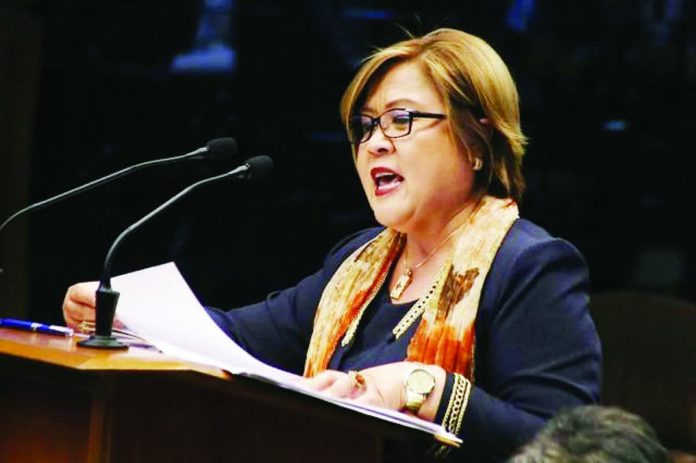
ML Party-list’s Cong. Leila de Lima questioned the fiscal implications of redirecting P130 billion originally intended for foreign-assisted projects (FAPs), arguing that the move could disrupt the government’s expenditure and financing framework.
“These are fiscally irresponsible choices. The Constitution makes the President’s budget of expenditures and sources of financing ‘the basis of the general appropriations bill.’ When we carve FAPs out of that program to make room for pork, we pass a GAA that no longer matches its own financing plan,” she said.
ACT Teachers Party-list’s Cong. Antonio Tinio also criticized the proposed spending priorities, arguing that ordinary taxpayers would ultimately shoulder the financial burden of allocations he described as political pork.
“Hindi po ito people’s budget. Lumolobo ang utang na binabayaran ng ordinaryong mamamayan, para pondohan ang pork ng mga pulitiko at political dynasties,” Tinio said.
Akbayan Party-list’s Cong. Percival Cendaña and Navotas City’s Cong. Toby Tiangco likewise challenged the House leadership’s assertions that the budget deliberations were conducted transparently.
The objections highlighted continuing disagreements over congressional spending priorities and safeguards against the use of public funds for political patronage.
House defends transparency, spending priorities
House Speaker Faustino “Bojie” Dy III rejected concerns over the chamber’s budget process, maintaining that transparency reforms had been strengthened through mechanisms such as the Budget Amendments Review SubCommittee (BARSc).
“Tiniyak natin na ito ay may transparency at itinuloy din natin ang mga repormang sinimulan natin nung nakaraang taon, katulad ng BARSc,” Dy said.
He emphasized that the House-approved spending plan prioritized essential public services, particularly healthcare, education and assistance to sectors vulnerable to economic and climate-related disruptions.
Dy said amendments introduced by the House increased the proposed health budget by P12.23 billion to help address the rising financial burden of medical treatment on Filipino families.
“With the amendments made by the House, the total budget for health increased by P12.23 billion. Ito po ang hakbang na aming ginawa dahil alam naming mabigat ang gastusin ng ating mga kababayan sa tuwing may nagkakasakit,” he said.
Education programs also received an additional P10.6 billion for school safety, inclusive learning, academic recovery and expanded access to tertiary education.
The additional allocation includes P500 million for the School Safety and Security Program.
“An additional of P10.6 billion in funds were allocated for education programs that support school safety, inclusive learning, academic recovery, and access to quality tertiary education. Kasama po dito ang P500 million para sa School Safety and Security Program para mabawasan ang pangamba ng mga magulang at siguraduhin nating protektado ang ating mga kabataan,” Dy said.
The Speaker also cited legislative initiatives addressing firearm safety and children’s exposure to harmful online content, including the proposed Children’s Social Media Safety Act, which seeks to introduce age restrictions, parental consent requirements and greater accountability for social media platforms.
Billions earmarked for El Niño response
The House-approved budget also contains additional agricultural assistance intended to cushion farmers and fisherfolk against the anticipated effects of a projected “Super El Niño,” which could bring prolonged dry conditions and threaten food production.
Dy said P10 billion was earmarked for the Presidential Assistance to Farmers and Fisherfolk, while another P500 million was allocated for expanded fertilizer assistance.
Irrigation projects received P4.09 billion, alongside P₱150 million for agricultural transport infrastructure.
The spending plan also provides P4.96 billion for farm-to-market roads, P100 million for high-value crops and P331 million for climate-resilient farm productivity support.
However, farm-to-market road allocations remain among the expenditures questioned by minority lawmakers over concerns about their possible use for political patronage.
Despite the objections, Dy thanked House members for approving the spending measure and reiterated the chamber’s commitment to transparency and accountability in allocating public resources.
The proposed P7.2-trillion budget will now undergo Senate consideration and subsequent stages of the legislative process before it can be enacted into law.
The controversy over the P130-billion realignment is expected to remain a central issue as lawmakers scrutinize the spending priorities, financing arrangements and safeguards governing the proposed national budget./PN