
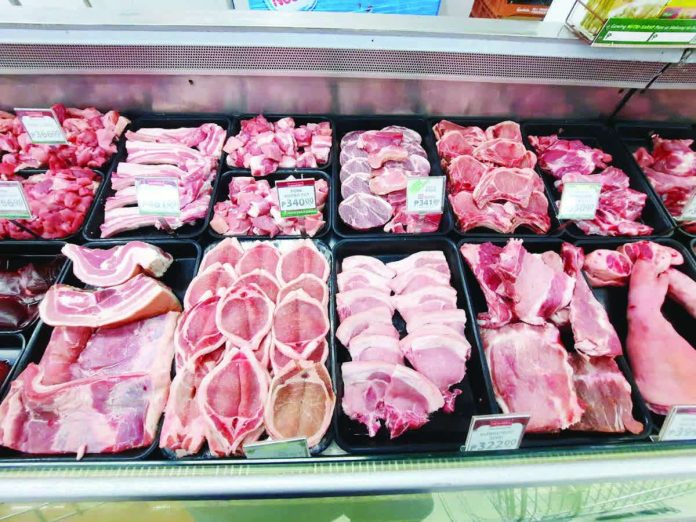
The British Chamber of Commerce of the Philippines (BCCP) is urging the government to allow the entry of more meat imports at lower tariffs to meet growing consumer demand.
“My point of issue is we should be doing as much as possible to make supplies freely available so that Philippine consumers have access to quality pork, whether it’s from the UK (United Kingdom), from other countries or local and that your prices remain stable …” BCCP executive vice chair Chris Nelson said at a media luncheon on Wednesday.
Nelson proposed raising the import quota for pork to a range between 75,000 metric tons (MT) and 80,000 MT instead of adjusting the minimum access volume (MAV) allocation.
He said it’s time to revise the MAV quantity to reflect the increasing food demand, noting that the Philippine population already expanded to about 112 million in 2024, from just 90 million when the MAV policy was instituted in the mid-1990s.
Recovering from ASF
The BCCP official also pointed out that it would take a long time for the domestic swine production to recover to pre-African Swine Fever (ASF) levels.
The DA earlier said the revised MAV guidelines would be promulgated by January next year, meant to provide a level playing field for all industry players and help stabilize retail prices.
Currently, the MAV allocation is set at 55,000 MT. However, the DA intends to allot 50 percent of the entire volume to meat processors, 30 percent to meat traders and 20 percent to the government.
Selling part of the allotment to the government is seen to help tame prices by distributing pork through Kadiwa stores.
Introduced in 1996, the scheme allows for the importation of specific volumes of agricultural products at reduced import duties.
A tariff rate of 15 percent is levied on pork imports that fall within the MAV quota, while a 25-percent import duty is imposed on shipments outside the MAV or quota.
The United Kingdom supplied 16.99 million kilograms of meat from January to September, primarily pork, data from the Bureau of Animal Industry showed. (Jordeene B. Lagare © Philippine Daily Inquirer)