
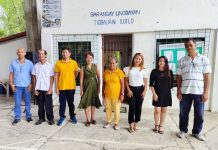



PLANTING more than 10,000 trees across Iloilo on Arbor Day yesterday was an inspiring sight. It demonstrated that thousands of Ilonggos were willing to devote their time and effort to restoring the environment.
The provincial government’s “Tanum Iloilo Towards a Forest Province” program deserves recognition for setting an ambitious vision: transforming Iloilo into a forest province by 2044.
But let us also be realistic. A tree-planting activity is only the beginning. The real measure of success is not how many seedlings are planted in a single day but how many survive after five, ten, or twenty years.
Across the country, countless tree-planting campaigns have produced impressive statistics and attractive photographs, only for many seedlings to perish because of poor site selection, lack of maintenance, grazing animals, fires, illegal cutting, or simple neglect. The Philippines has become accustomed to counting trees planted instead of forests successfully grown.
Iloilo must not fall into the same trap.
The province’s goal of becoming a “Forest Province” by 2044 is both bold and achievable — but only if it is pursued with consistency, scientific planning, and accountability. Every seedling should have a caretaker. Every planting site should be monitored regularly. Survival rates — not planting totals — should become the standard by which success is measured.
Equally important is the choice of species. The decision to prioritize mangroves, native and indigenous trees, and fruit-bearing species is a wise one because these trees provide long-term ecological and economic benefits. Native species support biodiversity, strengthen watersheds, reduce soil erosion, absorb carbon dioxide, and make communities more resilient against floods, landslides, and extreme heat. Mangroves, meanwhile, protect coastal communities from storm surges while serving as breeding grounds for fish and other marine life.
Environmental protection cannot rely solely on government offices. Schools, barangays, civic organizations, businesses, farmers, fisherfolk, and ordinary citizens must all become long-term partners in protecting these trees. Planting a seedling should not end with taking a photograph for social media. It should begin a commitment to nurture life.
Climate change has made environmental conservation no longer optional. Every year, Filipinos experience stronger typhoons, prolonged droughts, dangerous heat, flooding, and landslides. Healthy forests are among the country’s strongest natural defenses against these threats.
Gov. Arthur Defensor Jr.’s vision offers Iloilo an opportunity to become a model for environmental stewardship. Yet that vision will only become reality if future administrations continue the program with the same determination and if every community treats the campaign not as a one-day event but as a shared responsibility for the next two decades.
A forest cannot be built overnight. It grows one surviving tree at a time.
If Iloilo truly wants to become a Forest Province by 2044, the challenge begins not with planting 10,000 seedlings today — but with ensuring that 10,000 mature trees are still standing tomorrow.