

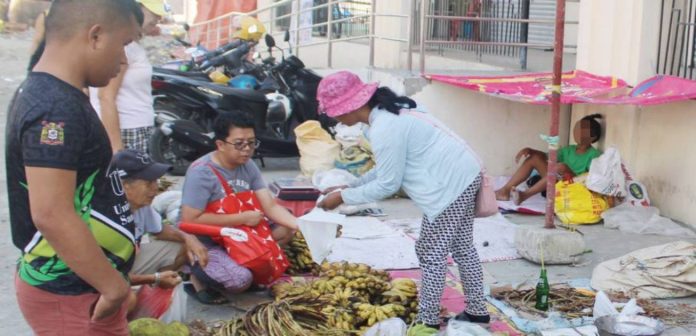
ILOILO City – More than 2,000 children in Western Visayas remain trapped in labor, with poverty continuing to push many of them out of classrooms and into workplaces, prompting the Department of Labor and Employment (DOLE) to step-up efforts to break the cycle.
Under Philippine laws, child labor refers to work performed by persons below 18 years old that exposes them to exploitation or harms their health, safety, or development.
DOLE reported that it has already monitored 2,064 child laborers across Region 6, representing 40.83 percent of its target to monitor 5,055 child laborers by Dec. 31, 2026.
The agency said the figures underscore the continuing challenge of child labor in Western Visayas despite ongoing government interventions.
DOLE identified agriculture, construction, manufacturing, and domestic work as among the sectors where child labor is commonly found.
Of the total monitored child laborers in the region, Iloilo Province recorded the highest number with 824, followed by Antique (482), Capiz (455), Guimaras (221), and Aklan (82).
The agency also disclosed that 1,652 children have already been profiled this year, a process aimed at identifying the circumstances that drive children into labor and linking affected families to government assistance programs.
According to DOLE, child labor remains largely fueled by poverty, limited access to education, family obligations, and lack of awareness about children’s rights.
“To effectively tackle the scourge of child labor, DOLE implements ongoing profiling and monitoring initiatives across all provinces of the region,” said DOLE assistant regional director Melisa Navarra.
“Our approach involves not only monitoring the children engaged in labor but also identifying their families and referring them to appropriate partner agencies. For instance, children who face issues related to their birth certificates are promptly referred to the Philippine Statistics Authority (PSA), while families in need of skills training are connected with the Technical Education and Skills Development Authority (TESDA),” she stressed.
DOLE said it is strengthening livelihood programs for parents as part of its strategy to reduce the economic pressures that often force children to work.
“We are dedicated to assisting families by presenting them with sustainable livelihood opportunities that can ease their financial pressures and ultimately encourage their children to focus on education rather than work,” Navarra elaborated.
Navarra emphasized that addressing poverty is key to eliminating child labor in the region.
“Families are often forced to push their children into work because of their economic circumstances. Therefore, our livelihood programs play a vital role in offering families alternative means of income so that the children can have the chance to pursue their education,” she said.
“It is essential that children have the opportunity to learn, engage in social activities, and rest. Many of these children express their desire to earn money, unaware of the significant long-term consequences that working at such a young age may have on their futures,” she said.
“By law, children under the age of 18 are still minors and must be treated as such. We are committed to ensuring they do not engage in hazardous work while also advocating for their right to a balanced childhood filled with education and play,” she added.
“Kay iban feeling nila, physically capable na sila but by definition, below 18 is still considered children. Para sa aton they should be treated as children, especially dapat indi sila ma- involve sa hazardous work. Amo na gina-prevent naton. Ang iban, happy na to earn, so sige-sige sila and sometimes they miss going to school. So, dapat necessary gid ang education sa ila. Mga children dapat may time sila to rest, may time to play also,” Navarra stressed.
To strengthen its campaign, DOLE Region 6 will hold an Information and Service Caravan for 55 parents and child laborers in Passi City on June 11 in observance of World Day Against Child Labor.
On June 12, DOLE-6 will also roll out Project Angel Tree for 110 child laborer beneficiaries in Aklan, Antique, and Capiz.
“One of children’s rights is to have access to quality education and to be free from work, which is a key part of our advocacy. Children should not be working; they need to attend school. To all children, you have the right to be free from labor. By raising awareness, we aim to break the cycle of poverty and exploitation that forces children into work. We believe that protecting children from labor is not only a legal responsibility but also a moral obligation,” said Navarra./PN