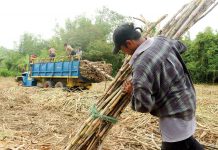



AS THE NATION celebrates Independence Day and reflects on the sacrifices made to secure freedom for Filipinos, it is worth asking a difficult question: What does freedom truly mean for a child who spends his days in the fields, on construction sites, or doing odd jobs to help put food on the family table?
For thousands of children in Western Visayas, freedom remains an elusive concept.
Recent figures from the Department of Labor and Employment (DOLE) revealed that 2,064 child laborers have already been monitored across the region this year. Iloilo alone accounts for 824 of them, followed by Antique, Capiz, Guimaras, and Aklan. Behind every number is a child who should be in school, learning lessons, making friends, playing games, and preparing for a brighter future.
Instead, many are working.
The tendency is to view child labor as a labor issue. It is certainly that. But to stop there is to miss the larger and harsher truth. Child labor is fundamentally a poverty issue.
Parents do not wake up one morning and decide that their children should abandon their studies and start earning money. Most do so because they feel they have no choice. When daily wages are insufficient, when jobs are scarce, when crops fail, when prices continue to rise, and when the next meal is uncertain, every available pair of hands becomes a source of survival.
Poverty, not greed, is often the real employer of child laborers.
This is why enforcement of labor laws, while necessary, cannot by itself solve the problem. Authorities can rescue children from workplaces today, but if their families return home to the same hunger and economic hardship, the risk remains that those children will eventually find themselves back at work tomorrow.
The experience of Western Visayas illustrates this reality. DOLE itself has acknowledged that poverty is the primary driver of child labor in the region. Its response is therefore not limited to profiling and monitoring children. The agency is also strengthening livelihood programs for parents, connecting families to skills training, government services, and income-generating opportunities. This approach deserves support because it addresses the root cause rather than merely the symptom.
Yet more must be done.
Local government units must invest more aggressively in livelihood assistance, especially in rural communities where child labor is often found in agriculture and informal work. National agencies must continue creating jobs that provide decent and stable incomes. Education assistance programs must be expanded to ensure that poor families are not forced to choose between sending a child to school and putting food on the table.
Businesses, civic organizations, and communities also have a role to play. The fight against child labor cannot be left to government alone. It requires a collective commitment to ensuring that every child is given a genuine chance at a better future.
This Independence Day, there will be speeches about patriotism, freedom, and nation-building. These themes are important. But perhaps one of the most meaningful ways to honor the sacrifices of our forebears is to ensure that Filipino children are free from the burdens that do not belong to them.
A child should not have to carry the weight of poverty on his shoulders.
True independence is not merely freedom from foreign rule. It is freedom from hunger, from exploitation, and from circumstances that rob children of their right to learn, dream, and simply be children.
Until every child in Western Visayas and across the country can enjoy that freedom, our work as a society remains unfinished.