



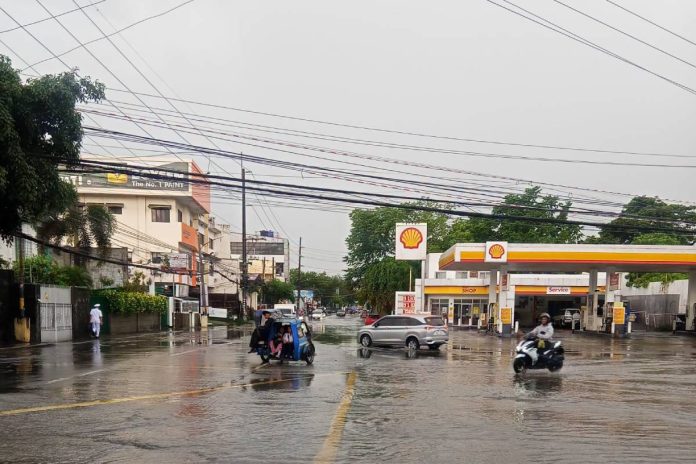
ILOILO City – The city government here is considering turning spaces beneath public plazas into underground catchment basins to temporarily store floodwater as extreme rainfall increasingly overwhelms the city’s drainage system.
Mayor Raisa Treñas said the proposed underground reservoirs would form part of a long-term flood mitigation strategy to be mapped out under the city’s Comprehensive Drainage Masterplan.
“Our proposal is to utilize the spaces underneath our plazas as underground catchment basins,” Treñas said.
The catchment basins would collect and temporarily store large volumes of rainwater during intense downpours, preventing runoff from immediately flooding low-lying communities.
“There are areas that we are planning to develop as catchment basins where floodwater can be stored so it will no longer inundate communities that are repeatedly affected by flooding,” the mayor said.
Treñas said the city’s existing drainage network was designed using historical rainfall patterns that no longer reflect current weather conditions.
“One of the issues whenever we experience heavy rains and flooding is our drainage system. In the past, we experienced less than 50 millimeters of rainfall, but now we can receive as much as 200 millimeters in just one hour,” she said.
Treñas stressed that worsening floods could not be blamed solely on inadequate or clogged drainage facilities.
“It’s not solely an issue of our drainage system. The bigger factor is climate change,” Treñas said.
The city government has allocated funds for the Comprehensive Drainage Masterplan, which will identify frequently flooded areas, measure the amount of water they receive and assess whether existing drainage facilities can cope with extreme rainfall.
“We have allotted a budget for a Comprehensive Drainage Masterplan to review the areas that are frequently flooded. Through this plan, we will determine the volume of water these areas receive,” Treñas said.
“We will have to review our drainage systems and determine their capacity,” she added.
With improved rainfall measurement and forecasting capabilities, the city government could design flood-control projects based on actual risks instead of outdated weather patterns, she said.
“Through our Comprehensive Drainage Masterplan, we will make sure that we can future-proof the city,” the mayor said.
The City Disaster Risk Reduction and Management Office (CDRRMO) is still preparing the technical requirements for the masterplan before the city can begin hiring consultants.
“Our requirements are still being completed so we can finalize our proposal and determine interested consultants. Once the CDRRMO completes the necessary requirements, we can proceed with hiring consultants for the Comprehensive Drainage Masterplan,” Treñas said.
Meanwhile, the city has extended Oplan Kontra Baha through a partnership with the Department of Labor and Employment. A new batch of workers will be deployed to continue clearing the Jaro River in La Paz.
Treñas said the city had completed nearly 421 declogging operations since last year to improve water flow through drainage canals.
“Our declogging operations are ongoing. We have already completed almost 421 declogging operations,” she said.
The city plans to establish a dedicated hotline and response team to act more quickly on reports of blocked drainage facilities.
“I ask the public that if you have requests for declogging, please let us know. We will establish a dedicated hotline for declogging concerns,” Treñas said.
Asked about accountability for questionable flood-control projects, the mayor said officials and other individuals found liable should face legal action.
“Everyone involved who should be charged must be held accountable,” she said.
Treñas said controversies surrounding flood-control projects had nevertheless prompted closer and faster cooperation among government offices.
“Because of these flood control issues, coordination among government agencies and local government units has become much faster,” she said./PN