



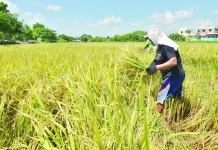
ILOILO City – The Philippine Atmospheric, Geophysical and Astronomical Services Administration (PAGASA) is dispelling misconceptions that the looming El Niño phenomenon will prevent rainfall.
It said residents of Western Visayas should brace for more frequent rain showers and thunderstorms in the coming months as the southwest monsoon, or habagat, has officially begun.
Many people wrongly assume El Niño automatically means prolonged dry weather and the absence of rain, said Jan Baron, weather facilities technician of PAGASA Iloilo Station, in an interview with Panay News.
Despite forecasts showing a high probability of El Niño developing later this year, PAGASA clarified that the onset of the habagat season signals the start of wetter weather conditions across the region.
Rainfall is expected to remain near normal from June to September, said Baron.
PAGASA Iloilo forecasts near-normal to near-average rainfall during June, July, August, and September, even as the likelihood of El Niño emerging between June and August has risen to 79 percent and could persist into early 2027.
“May expected gihapon nga pag-ulan. Isa abi ka misconception nga kun El Niño wala naga-ulan, mainit. Pero that’s not the case. If may El Nino, actually ginapa-enhance ya pa gid gani ang habagat, may pag-ulan kita gihapon diri sa Western Visayas,” said Baron.
Rainfall during the rainy season is expected to be significantly more frequent compared to the summer months, he added.
With wetter weather ahead, PAGASA urged the public to carry umbrellas when leaving their homes and regularly monitor weather bulletins, particularly those living in flood- and landslide-prone communities.
Habagat consists of warm and moist winds originating from the southwest that bring rains to the western sections of the country.
The state weather bureau said recent analyses showed persistent southwesterly winds affecting the western Philippines, a pattern reinforced by the development of a tropical cyclone over the Philippine Sea.
“With the intrusion of westerly winds and the progression of the general meteorological pattern across the country, these developments suggest the start of the southwest monsoon (habagat), which is one of the precursors of the onset of the rainy season,” PAGASA said.
Meanwhile, Severe Tropical Storm Domeng (Jangmi), which remains inside the Philippine Area of Responsibility, is expected to further enhance southwesterly winds and contribute to increased rainfall over parts of the country.
PAGASA also projected that between nine and 13 tropical cyclones could form within or enter the Philippine Area of Responsibility from June to November.
So far, four tropical cyclones have affected the country this year, including Domeng. On average, about 20 tropical cyclones enter or develop within Philippine territory annually./PN