
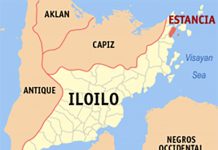




YESTERDAY, a barangay captain driving an SUV died in a vehicular accident in Barangay Dawis, New Lucena, Iloilo. The speeding vehicle was certainly no match to the three big trucks it rammed. Last week, a driver of an L30 van died in a collision with a Ford Ranger in Lambunao, Iloilo.
Every now and then we hear of injurious if not fatal road accidents, and we are very alarmed. Why is road safety a serious matter? Because it is a public concern. Because for every road crash statistics, behind every number of injury or death, is a person with a name, with a family, with a story.
According to the Philippine Statistics Authority, the number of deaths from road crashes has stayed above 8,000 since year 2010. Globally, road traffic injuries are the ninth leading cause of death, responsible for over 1.25 million deaths each year, according to the United Nations.
What should we do?
There are several risk factors in road safety – overspeeding, drunk or drugged driving, driving or riding without fastening the seat belt, riding a motorcycle without a helmet, and the use of gadgets while driving. We have laws addressing these but the statistics on road accidents remain high.
A few years ago a resolution was filed in the Lower House attempting to address this. It observed that the land transportation and road safety regulatory architecture of the country is archaic and/or severely broken, thus destroying many lives. It proposed the overhaul, updating and future-proofing of land transportation and road safety laws, as well as the related criminal and civil laws.
There have been calls for the formation of an inter-agency task force on the revision of laws on land transportation, road safety, and reckless driving to draft a new Land Transportation and Traffic Code that addresses a continuum of issues from the time the driver’s license is issued, during the process of manufacturing a land vehicle, and when the roads and bridges are built, to the law enforcement, investigation, prosecution, and adjudication aspects of road collisions and incidents.
This makes sense. It was way back in 1964 when the Land Transportation and Traffic Code (Republic Act 4136) became law. The great-grandmother of our country’s crime laws, the Revised Penal Code, was enacted in 1930. The Public Service Law (Commonwealth Act No. 146) which governs the issuance of the certificate of public convenience (franchise) is circa 1936. The Civil Code of the Philippines (Republic Act 386) is from 1949.
The strict enforcement of these laws may not enough. Over the years, patchwork amendments to these laws have been done and now we have a neighborhood of decrepit legal houses in need of either overall or major renovation to address present and future road safety concerns.
