
[av_one_full first min_height=” vertical_alignment=” space=” custom_margin=” margin=’0px’ padding=’0px’ border=” border_color=” radius=’0px’ background_color=” src=” background_position=’top left’ background_repeat=’no-repeat’ animation=”]
[av_heading heading=’‘SAVE OUR KIDS’
1,987 child laborers in Western Visayas ‘ tag=’h3′ style=’blockquote modern-quote’ size=” subheading_active=’subheading_below’ subheading_size=’15’ padding=’10’ color=” custom_font=”]
BY GLENDA SOLOGASTOA
[/av_heading]
[av_textblock size=” font_color=” color=”]
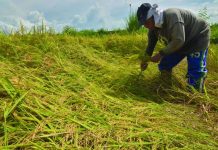
ILOILO City – In Western Visayas, 1,987 children are engaged in work that are mentally, physically, socially or morally dangerous, and interfere with their schooling, according to the Department of Labor and Employment (DOLE).
Sadly, not a single child labor complaint has been filed against the perpetrators, revealed Raji Alvarado, technical staff of the Regional Sub-Committee for the Welfare of Children (RSCWC) in Western Visayas.
The International Labor Organization (ILO) defines child labor as “work that deprives children of their childhood, their potential and their dignity, and that is harmful to physical and mental development.”
The region’s child laborers were identified through the Listahanan or the National Household Targeting System for Poverty Reduction of the Department of Social Welfare and Development (DSWD). It is an information management system that identifies who and where the poor are nationwide.
According to Alvarado, the child laborers were 17 years old and below.
Child labor problems are prevalent in the provinces of Antique (1,121) and Iloilo (832), said Alvarado.
“Sila ang may pinakadako because of presence sang mga sakada nga ginadala nga mga kabataan,” he explained.
Sakadas are migrant farm workers. Those from Antique and Iloilo usually work in the sugarcane fields of Negros Occidental.
As a result of interventions made by various concerned agencies, 22 “high-risk” communities in the region were declared child labor-free, said Alvarado.
The children’s population in Western Visayas is more than 1.4 million.
Child labor was one of the three major concerns identified by representatives of various provincial councils for the protection of children and non-government organizations from five provinces of the region during the recent “Parent-Child Encounter Cum Advocacy on Street Children.” The other two were teen pregnancy and illegal drugs.
According to ILO, child labor refers to work that is mentally, physically, socially or morally dangerous and harmful to children; and interferes with their schooling by:
* depriving them of the opportunity to attend school
* obliging them to leave school prematurely, or requiring them to attempt to combine school attendance with excessively long and heavy work.
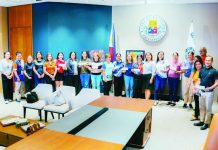
The “Parent-Child Encounter Cum Advocacy on Street Children” gathered inputs from children and their parents on different issues and concerns affecting the children sector. It was a joint-activity of DSWD-6, Council for the Welfare of Children and the RSCWC.
In its most extreme forms, child labor involves children being enslaved, separated from their families, exposed to serious hazards and illnesses and/or left to fend for themselves on the streets of large cities – often at a very early age.
According to ILO, whether or not particular forms of “work” can be called “child labor” depends on the child’s age, the type and hours of work performed, the conditions under which it is performed, and the objectives pursued by individual countries.
DSWD’s Listahan identified 9,998 poor children working in Western Visayas. However, not all of their work could be classified under child labor.
ILO classifies child labor distribution by branch of economic activity – agriculture, industry and services.
The agriculture sector comprises activities in agriculture, hunting forestry, and fishing.
The industry sector includes mining and quarrying, manufacturing, construction, and public utilities (electricity, gas and water).
The services sector consists of wholesale and retail trade; restaurants and hotels; transport, storage, and communications; finance, insurance, real-estate, and business services; and community as well as social personal services.
While child labor takes many different forms, a priority is to eliminate without delay the worst forms of child labor as defined by Article 3 of ILO Convention No. 182:
(a) all forms of slavery or practices similar to slavery, such as the sale and trafficking of children, debt bondage and serfdom and forced or compulsory labor, including forced or compulsory recruitment of children for use in armed conflict;
(b) the use, procuring or offering of a child for prostitution, for the production of pornography or for pornographic performances;
(c) the use, procuring or offering of a child for illicit activities, in particular for the production and trafficking of drugs as defined in the relevant international treaties;
(d) work which, by its nature or the circumstances in which it is carried out, is likely to harm the health, safety or morals of children.
The inputs gathered at the “Parent-Child Encounter Cum Advocacy on Street Children” will serve as basis for RSCWC’s planning and programming with member-agencies.
The activity was also part of the celebration of 24th National Children’s Month with the theme “Isulong: Kalidad na Edukasyon para sa mga Bata!”/PN
[/av_textblock]
[/av_one_full]