


MANILA — The Supreme Court has begun scrutinizing the legality of billions of pesos in “unprogrammed appropriations” embedded in the 2024 to 2026 national budgets, with top economists and legal experts warning of potential abuse even as government lawyers defended the mechanism as essential for fiscal flexibility.
During oral arguments, four amici curiae or “friends of the court” presented contrasting views on the use, scale, and implications of the standby funds, which have surged significantly in recent years.
Former Finance and Budget Secretary Benjamin Diokno said unprogrammed appropriations have long been part of the national budget framework, dating back to 1987, but noted a sharp increase in recent years.
“From 2005 to 2026, Congress approved unprogrammed appropriations exceeding those proposed by the president only five times… The increases in the last three years, however, have been particularly large,” Diokno said.
Former National Economic and Development Authority chief Solita Monsod echoed concerns over the growing amounts, warning that such funds may be used as a new form of pork barrel.
“The new pork barrel system versus the PDAF; well, the new pork barrel is obviously obscenely larger in scale. The unprogrammed appropriations were chosen as the place to hide the lump sum appropriations,” Monsod said.
She added that the funds surged significantly beginning in 2022, reaching as much as P800 billion.
Meanwhile, former Senate President Franklin Drilon said unprogrammed appropriations are not inherently unconstitutional, but stressed they should only be utilized when the government has excess revenues.
“It also loses its character as a special appropriation, and instead operates as a disguised general appropriation that may serve to expand the footprint of the original budget submitted by the president,” Drilon said.
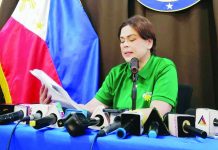
Representing the government, Solicitor General Darlene Berberabe defended the practice, emphasizing its role in maintaining fiscal flexibility.
“Unprogrammed appropriations give government fiscal flexibility. They ensure that a windfall does not go undeployed while public needs go unmet,” she said, adding that their constitutionality has already been upheld by the Court.
Berberabe also underscored the importance of respecting the separation of powers, cautioning against invalidating legislative mechanisms without clear constitutional conflict.
“Respect for the separation of powers demands the utmost wisdom of this honorable court. The invalidation of the entire legislative mechanism should not be done unless the petitioners have shown a clear and irreconcilable conflict with the constitution,” she said.
The continuation of oral arguments has been scheduled for April 21./PN