


ILOILO City — Alarmed by the deadly school shooting in Tacloban City linked to bullying, the Department of Education (DepEd) in Western Visayas has ordered an intensified anti-bullying campaign and tighter security measures across the region’s public elementary and high schools serving nearly one million learners.
The Tacloban shooting left three students dead and several others injured. Western Visayas education officials seek to prevent a similar tragedy from occurring in the region’s schools.
Regional Director Cristito Eco directed all eight Schools Division Offices (SDOs) to strengthen security protocols and coordinate with law enforcement agencies.
According to DepEd-6 information officer Hernani Escullar Jr., beyond physical security measures they are placing renewed focus on addressing bullying, which school authorities believe must be tackled proactively to prevent conflicts among learners from escalating.
“We have to strengthen our advocacy on anti-bullying, kag gina-remind man ang aton mna school heads nga they must be advocates. For example, every flag-raising ceremony in the morning, they should reiterate such policy sa aton mga kabataan,” Escullar said.
In the fatal Tacloban City high school shooting, the two suspected minor shooters were believed to be victims of bullying by their schoolmates.
Under Republic Act No. 10627 (Anti-Bullying Act of 2013), bullying is defined as any severe or repeated use by one or more students of a written, verbal, or electronic expression, or a physical act or gesture. These actions are considered bullying if they cause physical/emotional harm, create a hostile environment, infringe on rights, or disrupt the educational process.
Escullar likewise urged parents to closely monitor their children’s emotional well-being and immediately coordinate with teachers, guidance counselors, or school administrators if they notice behavioral changes that may indicate bullying or other concerns.
For students proven to be victims of bullying, Escullar said psychosocial interventions, including psychological first aid, alternative learning arrangements, and classroom separation from alleged bullies, remain available.
DepEd-6 also reminded schools to strengthen implementation of the Learners’ Rights Protection (LRP) policy and make reporting mechanisms more accessible to students.
“Hotlines will be made available for students to contact should they find themselves or others in precarious situations,” Escullar said.
“It is essential that our schools are environments where all students feel safe and protected from bullying. We must create a culture where reporting these incidents is encouraged and protected,” he stressed. “There is no place for bullying sa aton mga eskwelahan.”
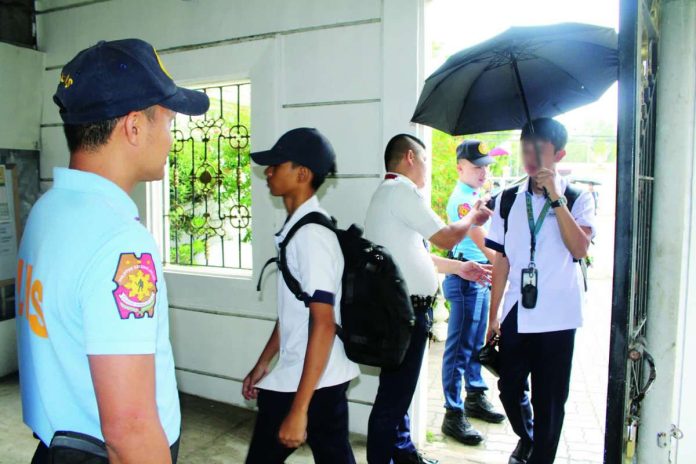
As to physical security measures, Escullar said Regional Director Cristito Eco’s directive includes law enforcement visibility around schools, conducting inventories of metal detectors and closed-circuit television (CCTV) cameras, and ensuring stricter inspections of bags carried by students and visitors entering school premises.
DepEd-6 is also urging schools to coordinate with barangay officials and village watchmen (tanods) to supplement security efforts, especially in areas where police resources are limited.
“Kay ti medyo limited man ang mga police personnel naton, kag tama man kalapad ang aton area, so our barangay tanods maka-help gid nga ma-make sure safe ang aton mga eskwelahan,” Escullar stressed.
He added that police officers and patrol vehicles are already being deployed around school perimeters.
“Very thankful kita sa aton Philippine national Police. May pwesto kon sa diin naga-deploy sila sang personnel. May mga patrol cars man sa perimeters sang aton nga mga eskwelahan,” he said.
Escullar acknowledged that many public schools still lack adequate security equipment. As a result, DepEd is working with local government units and other stakeholders to secure funding for additional metal detectors and CCTV cameras.
“We are coordinating with local officials and chief executives to expedite the procurement of these essential security tools which will be installed at school entrances and common areas,” he said.
“These measures will help prevent any unauthorized individuals or harmful items from entering our schools,” he stressed.
While bag inspections have long been part of school security procedures, Escullar emphasized that searches must follow established protocols that respect students’ rights.
“Based on our protocols, ang bata amo mismo ang ma-open sang ila bags. Kun i-check gid man ang bag, dapat there’s some sort of stick nga indi magsulod ang kamot sang inspecting personnel sa bag sang bata,” he said.
If suspicious items are discovered, Escullar said the concerned student will be discreetly escorted to the school principal’s office or school guidance counselor’s office for further inspection to avoid causing panic.
“We remind our school heads to prioritize the safety of learners. Implement gid naton mga security protocols to make our premises safe,” stressed Escullar.
DepEd-6 serves approximately 984,624 learners in public and private schools./PN