


MANILA — The defense of Vice President Sara Duterte-Carpio sought to weaken the link between her corporate interests and allegations concerning her wealth Tuesday after a Securities and Exchange Commission (SEC) official acknowledged that companies are not legally required to declare dividends and that the agency lacks information on other possible sources of her assets.
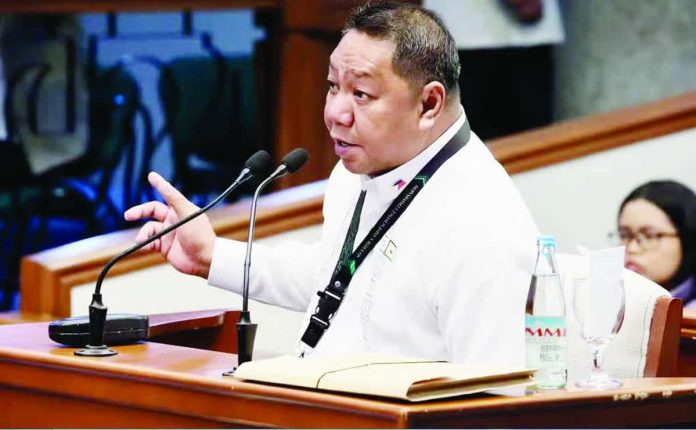
SEC Company Registration and Monitoring Department Director Gerardo del Rosario made the admissions during questioning by defense lawyer Justin Gular on the 28th day of Duterte-Carpio’s impeachment trial.
Gular cited Section 42 of the Corporation Code, which states that “the board of directors of a stock corporation may declare dividends out of the unrestricted retained earnings which shall be payable in cash, property, or in stock to all stockholders on the basis of outstanding stock held by them.”
Asked by Gular whether the words “may declare” meant that the declaration of dividends was discretionary rather than mandatory, Del Rosario agreed.
The exchange came after Del Rosario presented records involving 18 companies in which Duterte-Carpio or her husband, Manases Carpio, reportedly have interests.
According to Del Rosario, 10 of the 18 companies did not declare dividends during several years between 2004 and 2025.
Eight other companies had not submitted annual financial statements to the SEC, preventing the agency from determining from its records whether the firms had distributed dividends.
Del Rosario also identified circumstances under Section 42 that allow corporations to retain earnings instead of declaring dividends.
These include approved corporate expansion programs, restrictions in loan agreements requiring creditor consent before dividends may be issued, and special circumstances requiring companies to retain earnings, such as establishing reserves for possible contingencies.
The defense then questioned whether the SEC records were sufficient to establish that Duterte-Carpio had a substantial interest in the companies being examined.
Gular cited Section 3(i) of the Code of Conduct and Ethical Standards for Public Officials and Employees, which he said applies when a public official is a substantial shareholder or has a substantial interest in a business.
Asked whether he could determine if Duterte-Carpio qualified as a substantial shareholder or held substantial interests in the 18 companies, Del Rosario answered, “No.”
Gular also sought to establish the limits of the SEC’s information on other possible sources of Duterte-Carpio’s assets.
He asked whether Del Rosario had information concerning inheritance, property sales and land valuations that could account for Duterte-Carpio’s assets apart from possible dividends from the companies.
Del Rosario said the SEC had no such information because those matters were outside the agency’s mandate.
The testimony came as the Senate impeachment court continues examining Duterte-Carpio’s corporate interests and financial disclosures in connection with allegations concerning her wealth and compliance with rules governing public officials.
The prosecution has been using SEC records to examine Duterte-Carpio’s shareholdings, corporate positions and possible income from companies linked to her and her husband./PN