



AN EARTHQUAKE does not give warnings, negotiate deadlines, or wait for government agencies to finish their training programs. When buildings collapse and lives hang in the balance, there is no room for half-prepared rescuers. Every second counts. Every mistake can be fatal.
This is why the latest assessment of disaster response teams in Western Visayas, as reported by this paper, should send alarm bells ringing across every provincial capitol, city hall and municipal government in the region.
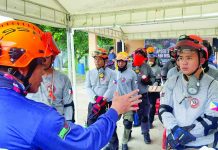
Following an intensive eight-day collapsed-structure search-and-rescue training in Pavia, Iloilo conducted by the Office of Civil Defense (OCD), 29 participating teams received a readiness rating of just six out of 10. Even more disturbing, their instructor estimated that they were operating at only about 20 percent of their potential capability.
Six out of 10 may be a passing grade in some classrooms. In disaster response, it could mean the difference between pulling a victim out alive and recovering a body.
The assessment exposed deficiencies in advanced rescue techniques, tactical discipline, hazard recognition and operational coordination. These are critical weaknesses in a profession where one wrong decision can turn a rescuer into another casualty.
What makes this revelation particularly worrisome is the double responsibility confronting Western Visayasl it has been designated as the first assisting region expected to deploy rescuers to Metro Manila should the dreaded “Big One” strike. Yet the region itself faces a potentially devastating earthquake from the 90-kilometer West Panay Fault.
Imagine the nightmare: a powerful earthquake strikes Panay, buildings collapse, roads become impassable, and thousands desperately await rescue. Would our emergency teams have the training, equipment and operational discipline to respond effectively?
The uncomfortable answer, based on the OCD assessment, is that we are not yet sufficiently prepared.
And this vulnerability becomes increasingly dangerous as Iloilo City and other urban centers continue their rapid transformation. Multistory buildings, commercial complexes, condominiums and densely populated communities are multiplying. Unfortunately, the sophistication of our rescue capabilities has not necessarily kept pace with the sophistication of our infrastructure.
Every provincial, city and municipal government should therefore assess its rescue capabilities, allocate sufficient resources for sustained training, maintain specialized equipment and institutionalize realistic disaster simulations.
There must also be stronger coordination among neighboring local governments. A catastrophic earthquake will not respect political boundaries. When one locality is overwhelmed, others must be capable of providing immediate and effective assistance.
Disaster preparedness must transcend political rivalries, administrative divisions and budgetary excuses.
Above all, government officials must abandon the dangerous habit of treating disaster readiness as a seasonal concern, enthusiastically discussed during preparedness campaigns and conveniently forgotten afterward.
When the ground shakes and buildings come crashing down, the people trapped beneath the rubble will not be asking how many training seminars their rescuers attended or how much equipment their governments purchased. They will have only one desperate question: Can somebody save us?
And when that moment comes, six out of 10 will simply not be good enough.