


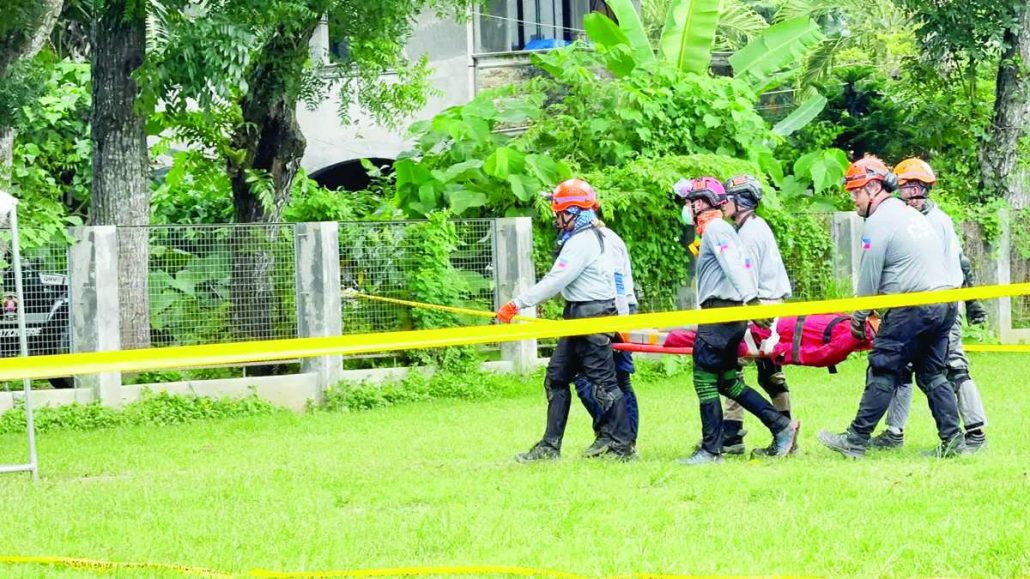
ILOILO City — Western Visayas faces serious gaps in its ability to respond to catastrophic earthquakes and building collapses, with disaster response teams receiving a readiness rating of just six out of 10 following an intensive eight-day search-and-rescue training program conducted by the Office of Civil Defense (OCD).
The assessment has raised concerns over the region’s preparedness for a major earthquake, particularly as Western Visayas is designated as the first assisting region expected to deploy rescue personnel to Metro Manila should the feared “Big One” strike.
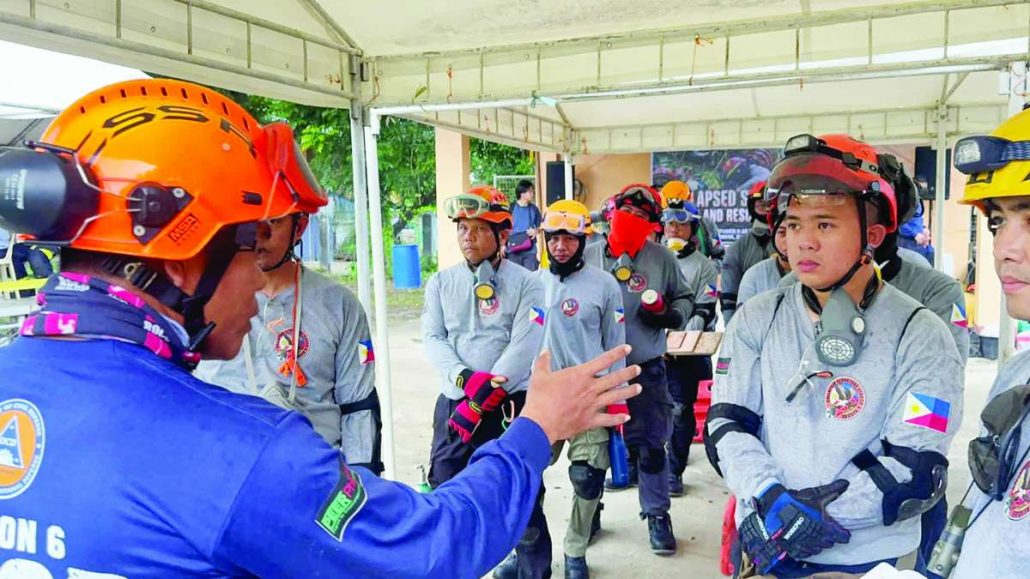
Search and Rescue Instructor James Ultin Benares said the 29 participating teams demonstrated basic rescue competencies but still lacked the advanced skills, tactical discipline and situational awareness necessary for complex collapsed-structure operations.
He estimated that the responders were operating at only about 20 percent of their potential capability, underscoring the need for sustained training and repeated emergency simulations.
“If they cannot perform…because our concern as instructors is their well-being and safety, if we see as well nga hazard, medyo overwhelmed sila, and they are not performing well, they cannot see the hazard that they are doing, we will have to stop them as a warning. But for now, I can rate them 6 pa lang. Mahambal ta nga it’s too far pa. Kay ara pa lang ta sa 20% sang ila performance,” Benares said.
The assessment followed the final simulation exercise of the Collapsed Structure Search and Rescue (CSSR) training held on October 17, at Villa Juanita Subdivision in Barangay Anilao, Pavia, Iloilo.
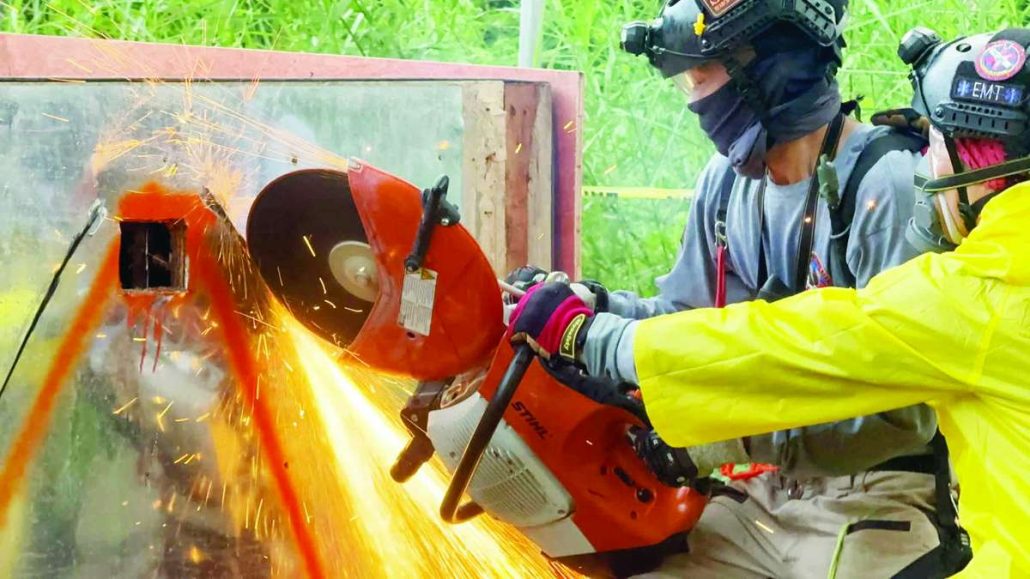
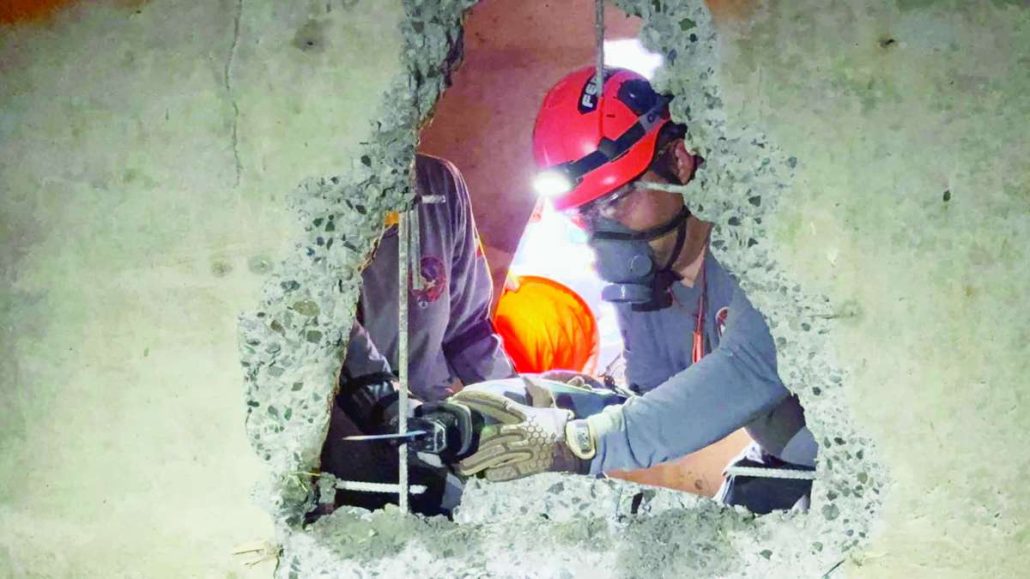
The exercise tested responders’ ability to locate trapped victims, assess structural hazards, breach concrete barriers and extract casualties under physically demanding and time-sensitive conditions.
Benares noted that exhaustion from eight consecutive days of training and early-morning deployments affected the participants’ speed, coordination and decision-making.
He emphasized that rescuers must learn to recognize dangerous structural conditions before attempting extraction operations, warning that failure to identify hazards could put both rescue personnel and trapped victims at risk.
Despite the shortcomings, Benares expressed optimism that continuous drills and advanced technical instruction would significantly improve the teams’ operational capabilities.
Region faces double earthquake threat
OCD Region 6 director Raul Fernandez acknowledged that Western Visayas still lacks sufficient highly trained personnel capable of conducting specialized rescue operations in collapsed buildings.
“Wala pa talaga tayong ano…ang responders natin talaga are not highly trained on collapse structures. And then, meron tayong mandate na in case magkaroon ng Big One, we are the first region to deploy ng ating mga responders sa Metro Manila,” said Fernandez.
The region’s responsibilities are particularly challenging because it must prepare not only to assist Metro Manila but also to respond to a potentially destructive earthquake within its own territory.
Western Visayas is exposed to the active 90-kilometer West Panay Fault, which is capable of generating powerful earthquakes that could damage communities and infrastructure across Panay Island.
Fernandez said rapid urbanization, particularly the proliferation of multistory buildings in Iloilo City and other developing urban centers, has increased the urgency of establishing technically proficient rescue units.
“We have Iloilo City na highly urbanized na and some cities and other LGUs na maraming na ring nagtatayuang matataas na building. Not only, of course, mga earthquake…in any collapsed structure situation, at least meron tayong matatawag na responders na sarili natin,” he added.
OCD pushes for more rescue teams
To address these vulnerabilities, OCD-6 has begun acquiring specialized rescue equipment and expanding technical training for provincial and local disaster response personnel.
“Wala tayong capability na ganoon, so what we did was we invested sa mga highly specialized equipment kahit noon pa, kahit noong last year pa. We requested for a specialized training sa ating mga LGUs,” Fernandez said.
The training brought together 29 participating teams from the Provincial Disaster Risk Reduction and Management Offices of Aklan, Antique, Capiz, Guimaras and Iloilo, along with representatives from local government units, state universities and colleges, nongovernmental organizations and the Philippine Red Cross.
Fernandez said the OCD aims to establish at least two deployable Urban Search and Rescue (USAR) teams in each province to strengthen the region’s capacity to respond to large-scale emergencies.
“OCD initiated this training para at least other LGUs would follow through. Ang tina-target natin na at least ang province natin have two teams of deployable USAR team, ‘yung urban search and rescue team. Iloilo City meron na sila, but if city ang tatamaan, we can also deploy other teams from other provinces,” he added.
The training covered technical search and location procedures, structural stabilization or shoring, rescue equipment operation, concrete breaching, casualty extraction and prehospital care.
Although participants completed the simulation exercises, the instructors’ assessment highlighted the considerable distance between acquiring foundational rescue skills and achieving the proficiency required for actual disaster deployments.
OCD-6 plans to coordinate with local governments for follow-up exercises, continuous technical training and maintenance of specialized rescue equipment.
The initiative seeks to build a network of rescue teams capable of reinforcing one another when an earthquake or structural collapse overwhelms the resources of an affected locality./PN