



WITH INFLATION already accelerating this year, an economist warned that the looming strong El Niño could worsen it further by shrinking agricultural production and driving up electricity costs.
Sonny Africa, executive director of think tank Ibon Foundation, said the extreme weather phenomenon could not come at a worse time, as the country is already facing supply shock-driven inflation that started after the US-Israel attack on Iran.
He told the Inquirer that higher oil prices have raised transportation and production costs, while the weakening peso has made imports such as oil, food and fertilizer more expensive.
Africa said these have added to inflationary pressures.
Based on data from the Philippine Statistics Authority (PSA), inflation hit 7.2 percent in April from 4.1 percent in March, 2.4 percent in February and 2 percent in January.
It remained elevated at 6.8 percent in May, 6.45 percent in June, 6.2 percent in July and 6.1 percent in August before rising to 7.2 percent in September.
Africa said inflation averaged 2.8 percent in the first three months of the year before increasing to 6.7 percent from April to September.
For the poorest 30 percent of households, the increase was even steeper, with inflation rising from 2.8 percent to 8.4 percent over the same period.
He also pointed out that there were no apparent signs that the crisis in the Middle East would subside before the end of the year, leaving the country exposed to continued supply-side pressures.
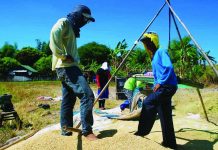
The impact could become more severe as El Niño threatens to further contract agricultural production, “forcing greater reliance on increasingly expensive imports.”
Africa pointed out that the country’s crop production had already contracted by midyear compared with the same period last year, while the expected prolonged heat could also affect fisheries and livestock production.
He said these could potentially trigger a critical food supply and price shock in early 2027.
Inflation driver
Africa’s warning came as food prices have already emerged as a major contributor to inflation, with the PSA saying food inflation accounted for 34.4 percent of overall inflation last month, contributing 2.5 percentage points to the headline rate.
The biggest contributors to food inflation were cereals and cereal products such as rice, corn, flour, bread, pasta and other cereals, which accounted for 64.5 percent, or 4.4 percentage points, of food inflation.
Fish and other seafood followed with an 18.7 percent share, equivalent to 1.3 percentage points, while vegetables, tubers, plantains, cooking bananas and pulses accounted for 15.4 percent, or 1 percentage point.
Electricity at risk
El Niño could also affect inflation beyond food prices, with Africa pointing out that lower water availability could reduce hydropower generation at a time when demand for electricity is expected to increase.
Households and businesses will require more cooling because of the extreme heat.
Africa said this could push electricity costs higher or, in a more severe scenario, contribute to power supply disruptions.
The Department of Science and Technology has warned that El Niño could bring drought conditions to all Philippine provinces by March 2027. (Kurt Dela Peña © Philippine Daily Inquirer)