


ILOILO – Super Typhoon “Uwan” left a humanitarian toll across Western Visayas. Rains and strong winds displaced more than 38,000 residents across five provinces, exposing once again the region’s vulnerability to climate-driven disasters.
As of November 10, the Department of Social Welfare and Development (DSWD) reported that 12,545 families — or 38,389 individuals — across 284 barangays in 35 local government units were affected by the cyclone’s onslaught.
Capiz and Aklan bore the brunt of the storm, reporting the highest number of displaced residents. Capiz logged 7,833 affected families or 23,985 individuals, while Aklan recorded 1,955 families or 5,851 individuals struggling to recover from flooding and damage to property and livelihoods.
Antique also suffered heavy disruption with 1,133 affected families (3,202 individuals), followed by Iloilo with 1,068 families (3,712 individuals) and Guimaras with 551 families (1,639 individuals).
Of the total number, 6,714 families or 20,028 individuals are currently staying in 392 evacuation centers, mostly in schools and barangay halls. Another 2,750 families or 8,765 individuals have sought temporary shelter with friends and relatives.
Despite Uwan’s center remaining offshore, its intensity prompted authorities to place the region under Tropical Cyclone Wind Signal No. 1, triggering widespread precautionary evacuations that helped prevent casualties.
The DSWD said it has mobilized P256,365 worth of assistance to affected families and maintains P51.99 million in available resources for ongoing relief operations — P2.79 million in standby funds and P49.2 million in food and non-food items.
“These centers, often established in schools and community halls, serve as crucial lifelines during emergencies, providing shelter and basic necessities to those fleeing the harsh conditions outside,” the DSWD noted.
Assessments are underway to determine the full extent of the damage to infrastructure, agriculture, and housing. Early reports indicate losses of crops and livestock in rural communities heavily dependent on farming.
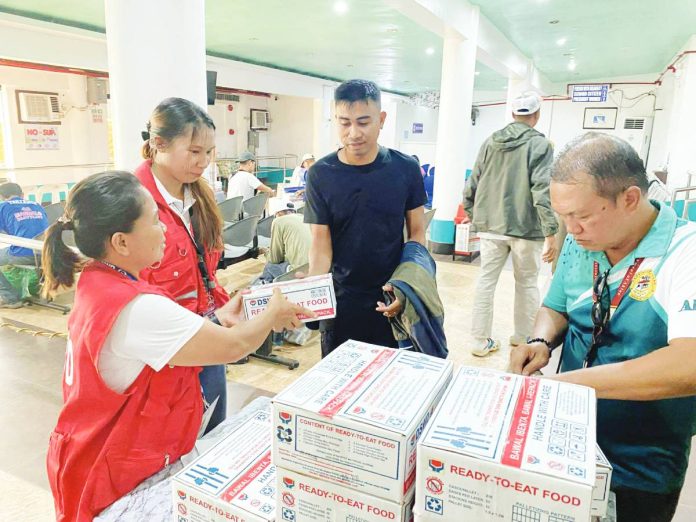
Local organizations and volunteers are helping deliver food packs and medical assistance to evacuation sites, while psychosocial support services have been deployed to help families cope with displacement and anxiety.
Health personnel have been mobilized to monitor the condition of children and the elderly in temporary shelters, as the risk of waterborne diseases rises following days of flooding.
As recovery efforts begin, many residents and community leaders are urging stronger disaster preparedness measures. They call for climate-resilient infrastructure and comprehensive response planning to better protect the region from future storms.
The people of Western Visayas, officials said, continue to show the “spirit of resilience” that has defined them through past calamities — but the devastation from Uwan stands as another warning that preparedness, not just relief, must define the region’s disaster response moving forward./PN