




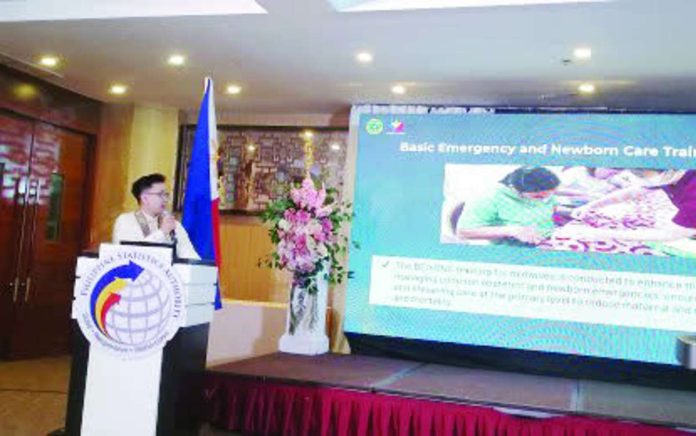
ILOILO City – Western Visayas recorded the highest postnatal care coverage in the country and sustained near-universal access to skilled maternal health services, according to results of the 2025 National Demographic and Health Survey (NDHS), highlighting significant gains in the region’s efforts to protect mothers and newborns.
Data presented by the Philippine Statistics Authority (PSA) showed that 91.4 percent of women in Western Visayas who gave birth received a postnatal check from a skilled health provider within the first two days after delivery, the highest rate among all regions in the Philippines.
The survey also revealed that 98.5 percent of women aged 15 to 49 who had given birth within two years before the survey received antenatal care from a skilled provider, such as a doctor, nurse or midwife, for their most recent live birth. The figure improved from 96.7 percent in 2022.
Meanwhile, postnatal care coverage rose from 87 percent in 2022 to 91.4 percent in 2025.
“Healthcare services during pregnancy, childbirth and after delivery are important for the survival and well-being of both the mother and the infant,” said Merissa Campaniel, PSA data analyst.
Campaniel said nearly half, or 47.7 percent, of women in the region completed at least eight antenatal care visits during pregnancy, placing Western Visayas sixth among all regions nationwide.
“Western Visayas recorded the highest percentage of women receiving postnatal checks with 91.4 percent or nine out of 10 women during the first two days after birth,” she said.
The survey also showed continued improvement in immunization coverage for pregnant women. About 82.8 percent of women aged 15 to 49 received tetanus injections to protect their babies against neonatal tetanus, up from 80 percent in 2022 and 79.2 percent in 2017.
Dr. Jose Martin Atienza, Medical Officer IV of the Family Health and Nutrition Section of the Department of Health – Region 6, attributed the positive trend to strengthened maternal health programs and improved access to healthcare services.
“The increasing trend may reflect strengthened maternal health programs, improved health-seeking behavior of pregnant women, and better access to antenatal care services across the region,” Atienza said.
Despite the gains, health officials noted that ensuring pregnant women complete the recommended number of prenatal visits remains a challenge.
“While access to antenatal care services is generally high, the completion of the recommended visit remains a challenge. Strengthening of ANC registration, continuity of care, health education and follow-up mechanism remain essential to improve maternal and newborn outcomes,” Atienza added.
He also emphasized the importance of sustained postpartum care for the early detection and management of maternal and newborn complications, which remains crucial in improving health outcomes for both mothers and children.
The NDHS maternal health data were gathered from women aged 15 to 49 who had given birth during the two years preceding the 2025 survey./PN