
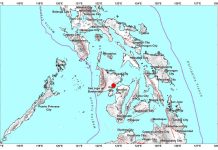



THE MAGNITUDE 4.3 earthquake that jolted Iloilo and neighboring provinces early Friday morning was an unwelcome wake-up call, and must be viewed as a warning — one that should shake local governments out of complacency before a far more destructive earthquake does.
At 5:11 a.m., the ground trembled, subsequently prompting class suspensions, evacuations and structural inspections of public buildings. Fortunately, no casualties or major damage were immediately reported. But therein lies the danger: the absence of disaster can create the illusion of preparedness.
Authorities in Anilao and Passi City suspended classes, while engineering personnel inspected schools and government facilities. Employees at the Iloilo Provincial Capitol were evacuated as its structural integrity was assessed.
These were smart precautions. But must the ground shake before we seriously examine whether our buildings are safe?
How many aging schools, hospitals, public markets and government buildings across Iloilo have undergone comprehensive structural assessments? How many could withstand a significantly stronger earthquake? And how many have deteriorated through years of neglect, substandard construction or inadequate maintenance?
Earthquake preparedness cannot be reduced to emergency inspections, ceremonial drills and reassuring government announcements. It demands regular structural assessments, strict enforcement of building standards, retrofitting of vulnerable facilities and sufficient funding for disaster resilience.
Schools deserve particular attention. Parents entrust their children to classrooms expecting education, not exposure to preventable danger. A school building that cannot withstand foreseeable seismic hazards is not merely an engineering concern; it is a failure of public responsibility.
Equally important is transparency. Inspection findings must not gather dust in government offices. Residents deserve to know which public buildings are safe, which need repairs and which should no longer be occupied.
Friday’s earthquake followed a magnitude 4.6 tremor in Negros Oriental just a day earlier. While these earthquakes do not necessarily foretell a stronger one, they remind us that seismic hazards are ever-present, and preparedness cannot wait. The greatest mistake would be to congratulate ourselves for escaping serious damage and then return to complacency.
Nature has given Ilonggos a warning without exacting a terrible price. That is an opportunity, not a guarantee.
The next earthquake could strike during school hours, when classrooms are crowded, offices are bustling and public markets are packed. It could also be considerably stronger.
When that happens, government competence will not be tested by how quickly officials suspend classes or dispatch inspectors after the shaking stops, but by how many lives were protected through precautions taken long before disaster struck.
Earthquakes do not wait for governments to become ready. And the next one may not be so forgiving.