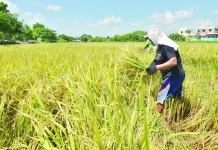
THERE are people on Semirara Island who still remember a time when there was not always enough rice on the table.
Root crops were a staple. Coffee was a luxury. For fishermen, the sea provided food, but finding a market for their catch was another matter. The island’s distance from the mainland made even ordinary necessities harder to come by, and opportunities to build a livelihood beyond subsistence were few.
That was Semirara not so long ago.
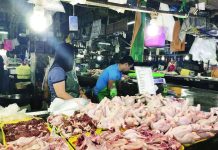
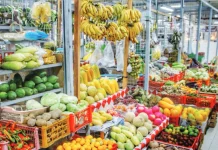
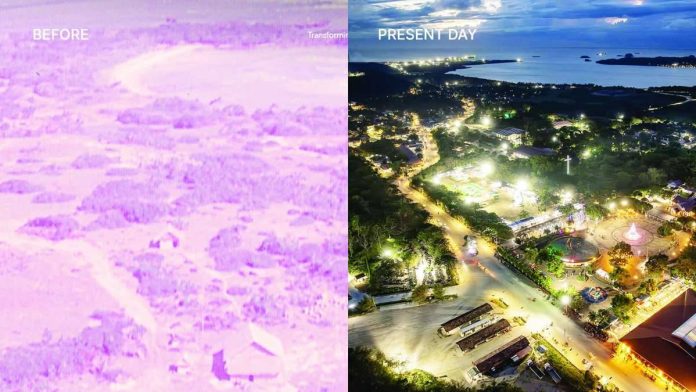
Today, the island presents a very different picture. Markets are stocked with goods, and residents can choose from a range of stores and services. Streets are lit at night. Internet connectivity is widely available. Boats and aircraft regularly connect the island to the mainland. Schools, health facilities, banks, and government services have become part of everyday life.
The transformation did not happen overnight. As Semirara’s coal industry developed, so too did the communities around it. When Semirara Mining and Power Corporation (SMPC) began managing the island’s coal operations in 1997, it became part of a longer story of change, one in which livelihoods expanded, infrastructure improved, and opportunities that once required leaving the island gradually became available closer to home.
Looking back at what Semirara was—and comparing it with what it has become—offers a glimpse of just how much the island has changed.
From traditional trades to new livelihoods
For Joel Ignacio, the president of the Semirara Fishermen’s Association (SEMFA), who has lived on Semirara for 50 years, the island he knew growing up was a very different place.
Fishing and farming were largely subsistence activities. Commercial fishing was difficult to sustain, markets were limited, and there were few opportunities to turn traditional trades into stable sources of income. For many families, simply making a living was a daily struggle.
The development of the coal industry brought new economic activity to the island. As SMPC began managing the mines in 1997, it also introduced livelihood programs intended to help residents participate in the expanding local economy.
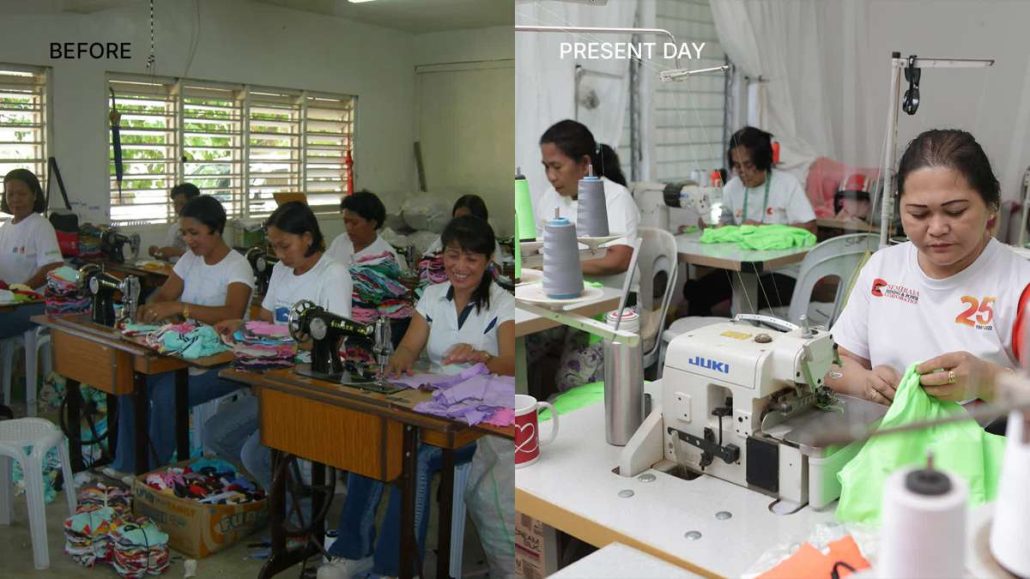
Traditional livelihoods were not left behind. Fisherfolk received fiberglass boats and fishing equipment. Farmers found opportunities through the company’s agro-farm and livestock projects. Local women were supported in developing tailoring activities, while community members were given assistance in handicrafts, seaweed cultivation, concrete hollow block production, and other local enterprises.
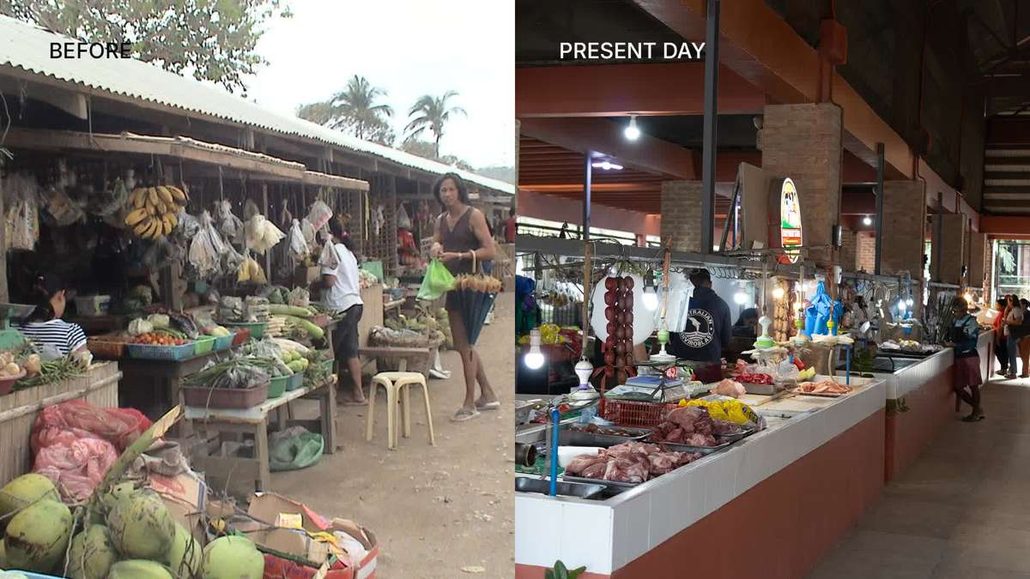
The change can also be seen in the municipality’s broader economic classification. Caluya, where Semirara is located, progressed from a fourth-class municipality to a first-class municipality in 2007—just ten years after SMPC began managing the island’s coal operations.
Bringing education closer to home
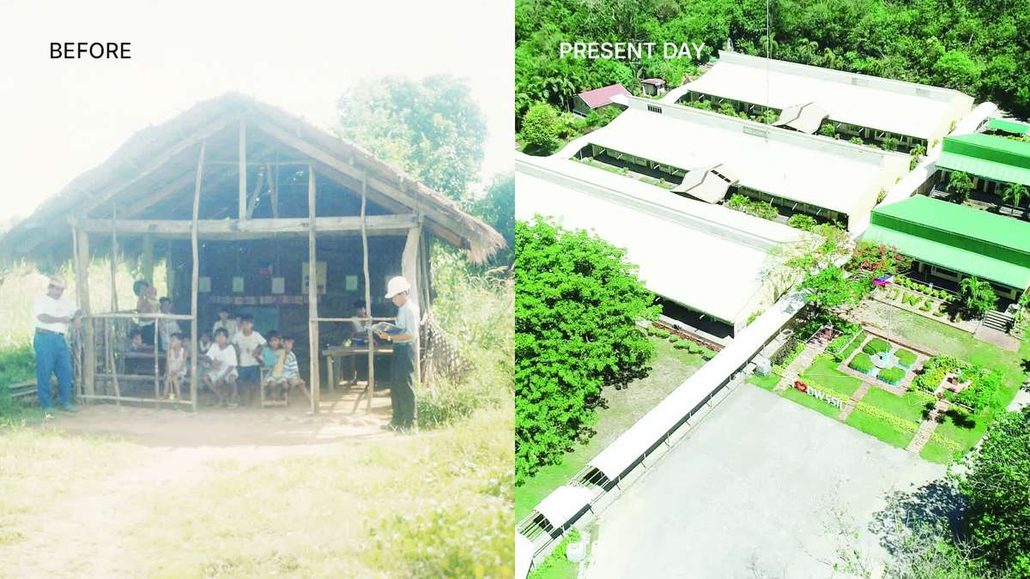
Grace Arguelles recalls that the challenges of education were once inseparable from the island’s isolation.
For students who wanted to continue beyond the education available locally, pursuing a degree could mean leaving Semirara—and leaving their families—for the mainland or even Manila. The same was true for aspiring teachers who needed specialized education and training that the island could not yet provide.
That began to change as educational opportunities expanded.
With SMPC’s support, the Divine Word School of Semirara Island, Inc. (DWSSII) was established to provide primary and secondary education locally. It has since expanded its offerings to include tertiary degree programs.
SMPC has also supported the construction of classrooms, laboratories, and other learning facilities, including facilities for schools such as Semirara National High School.
For students seeking practical skills rather than a traditional academic path, another option emerged in 2006 with the establishment of the TESDA-accredited Semirara Training Center, Inc. (STCI).
For today’s students, the idea that education might require leaving the island is no longer as inevitable as it once was.
Today, Grace serves as the elementary school principal of DWSSII.
Connecting communities, closing distances
Greg Duran’s memory of Semirara’s roads is a memory of distance.
There were few paved roads, and traveling between communities could be slow and difficult.
Today, approximately 51 kilometers of paved roads have been built and maintained with SMPC’s assistance. They connect communities to schools, markets, workplaces, and public facilities while making it easier to move agricultural and commercial goods around the island.
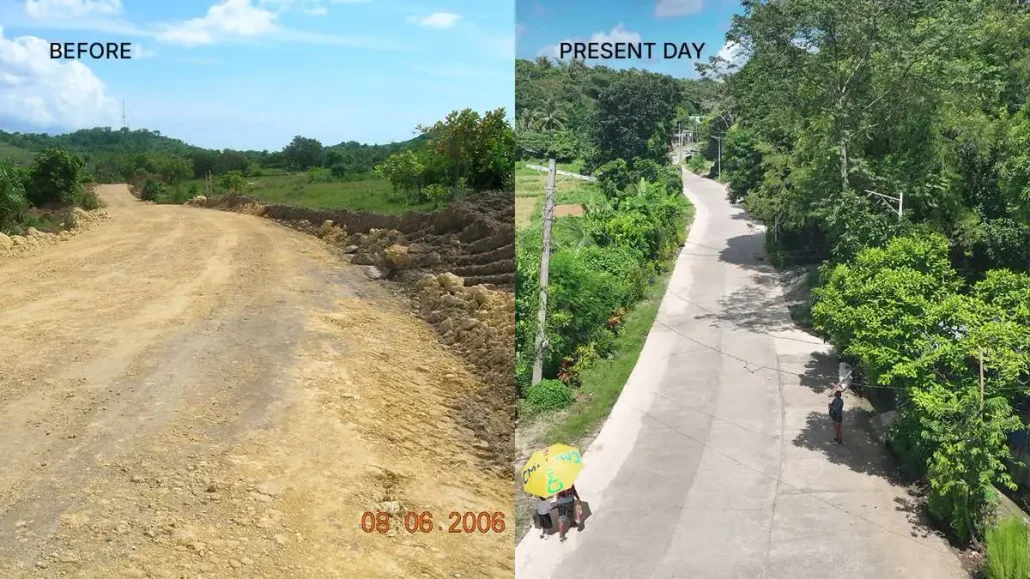
The island’s connections to the outside world have changed as well.
In 2019, SMPC helped construct Pinagpala Port, providing a more established maritime link to major ports such as Mindoro and Caticlan. SMPC’s passenger vessel, MV Ma. Cristina, has transported more than 272,000 passengers since 2016 , serving employees and residents alike.
The island’s air connection has also expanded. What was once a short runway with limited capacity has developed into a 1.8-kilometer airstrip with three large hangars, now accommodating regular chartered flights.
On the ground, SMPC’s shuttle service carries more than 10,000 passengers a day, helping connect workers and residents across the island.
As president of the Semirara Tricycle Operators and Drivers Association, Greg knows from experience how better roads can create better opportunities.
From kerosene lamps to a connected island
For Edward Malaluan, electricity is one of the clearest markers of how much Semirara has changed.
Growing up, reliable electricity was not something most households could take for granted. Edward remembers using a makeshift kerosene lamp while his family worked to make ends meet through seaweed farming.
Today, the same island is illuminated at night by homes, public facilities, and streetlights. Roads are paved and maintained. Electricity has become part of the ordinary rhythm of daily life rather than a luxury.
With SMPC’s assistance in constructing telecommunications towers, Semirara gained broader access to mobile and internet connectivity, including 4G service.
The arrival of financial services further changed everyday life. With support from SMPC and the local government, ATMs and major bank branches were established on the island. Workers could maintain salary accounts and access banking services locally, rather than making a trip elsewhere simply to conduct basic transactions.
Edward, now an SMPC Excavator Operator, knows that transformation firsthand.
A changing island, a continuing story
Semirara today bears little resemblance to the island remembered by its older residents.
The markets are fuller. The roads are longer and better connected. Electricity reaches more homes and public facilities. Students have more opportunities to study without leaving the island. Fishermen and farmers have more avenues to earn. Boats and aircraft have made the island less distant from the rest of the country.
None of these changes happened through a single project or in a single year. They emerged over decades, alongside the development of the coal industry and through the combined efforts of SMPC, the local government, residents, and community organizations.
For Semirara, the story of development is therefore also a story of transition: from subsistence to more diverse livelihoods, from limited access to broader opportunities, and from isolation to greater connection.
Coal may have been the resource beneath the island. But the transformation above it has been shaped by people—their work, their aspirations, and their efforts to build a better life for their families.
For more than two decades, SMPC has been part of that story, working alongside the community as Semirara has grown and changed.
And the story is not finished.
Semirara continues to change, carrying with it the memories of the island that once was and the ambitions of the community it is becoming./PN