



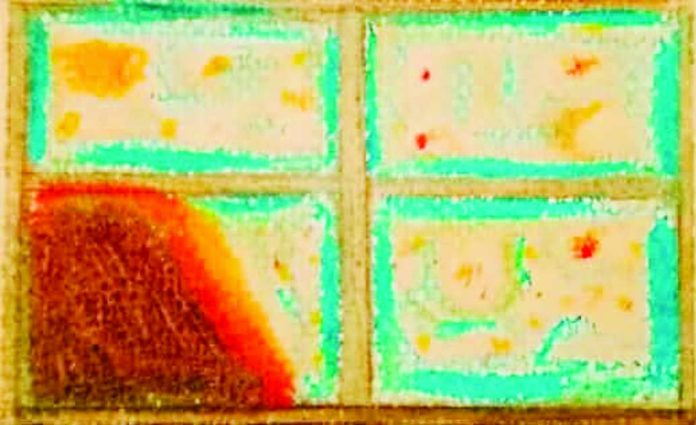
DARK CEILINGS and holes are easy to imagine, but hard to convey. “How dark is it?” “How depth does it go?” “How far down am I?”
Talking about our vulnerability out loud sometimes sucks the air out of our lungs — words struggle to breathe, and eyes shift downward in what some might call pure torture, as one might say. Yet, our souls need to escape, to put these emotions into words. A light stroke of a pen or a firm tap on a keyboard can turn these feelings into art.
Studies show that writing — whether creative, reflective, or expressive — can significantly improve mental health. In the process, it forms beautiful strings of words that can motivate others.
Take, for example, “On His Blindness” by John Milton. It transforms his sorrow over being unable to serve God through sight into a self-reflective poem. Ultimately, he realizes that active service is not the only way to be worthy of love. The poem concludes with the line, “They also serve who only stand and wait,” telling its readers that faith is the pillar of loving God. Written in 1673, this poem rings a familiar bell in the ears of Literature students and lovers, and is one of the most famous excerpts from the Puritan era.
Another beautiful example is Jose Corazon de Jesus’ “Itanong Mo Sa Bituin,” a relatable poem for romantics and many teenagers nowadays. The poem uses a star as the persona’s friend as he talks about how, just like the star, the girl he loves is as majestic as she is beyond his reach. The author turns his raw emotions and longing into words, painting a picture of what he feels. It eventually became a critically acclaimed masterpiece, raising our country’s stature in the field of literature.
Famous or not, words can heal the writer’s mind and touch the reader’s heart.
We don’t have to be the best writer out there to create something that makes people feel something. The authors we learn about in schools and social media were once thinkers who needed an output for their overflowing emotions. Letters on a screen or a piece of paper can lift the weight of life off our shoulders and make us self-aware of how we can heal and become better people. The syllables we write can also take us to different places and open up doors for many opportunities in life. Friendships, relationships, and love can sprout from planting our feelings in artistic but genuine ways.
Our emotions are endless and deep. A few words can’t perfectly describe how intense a person can feel. However, we can at least turn these moments of vulnerability into words that can empower. Through writing, we make things clear, we vent out our anger, and we make masterpieces along the way. Novels, poems, essays, journal entries, and works of fiction are places where the paper can listen to what we have to say. Through words written on a blinding screen or a tear-stained piece of paper, we can reflect on ourselves and read what our hearts write./PN