

MANILA – The Department of Health (DOH) has confirmed the local transmission of the more infectious United Kingdom (UK) coronavirus disease 2019 (COVID-19) variant in Bontoc, Mountain Province.
The DOH, however, emphasized that even with the local transmission of the B.1.1.7 variant of SARS-CoV-2 as identified through genomic sequencing, there is no “strong evidence” of community transmission.
“To date, all identified cases with the UK variant can be epidemiologically linked to cases coming directly from outside the country (importation) or from specific cases or exposures that can still be identified (local transmission),” the DOH said in a statement.
“There is still no strong evidence of community transmission of the UK COVID-19 variant in Bontoc in accordance with World Health Organization standards such as having large number of cases, case clusters in multiple areas, and inability to link cases to known sources of infection,” it added.
The DOH also noted that a mutation of a virus like the COVID-19 is “normal.”
“Mutation is a normal response and not necessarily ‘bad,’ but higher case numbers may lead to additional mutations and appearance of variants of concern,” the health department explained.
“There is no difference in the necessary actions that people should do for the UK variant. The minimum health standards remain to be the best way to halt transmission and avoid mutation of the virus,” it continued.
The country has recorded at least 17 cases of the variant. The first case announced on Jan. 13 was a Filipino who traveled to Dubai.
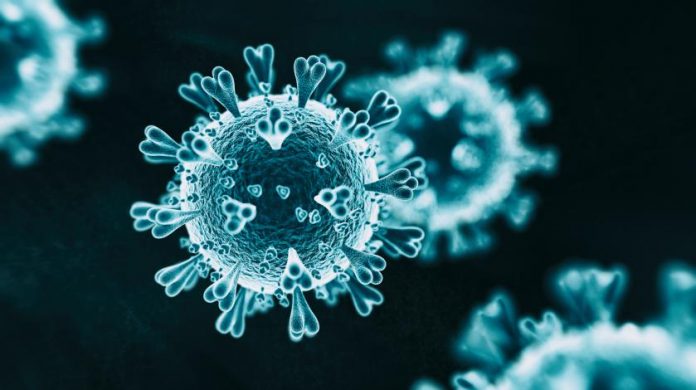
British scientists earlier said the B.1.1.7 has key mutations, including one that affects the “spike” protein, which the virus uses to infect human cells. The variant is believed to have first emerged in the UK in September last year.
Apart from the UK variant, five other variants are being monitored across the globe namely South Africa’s 501Y.V2, Malaysia’s 1701V, Nigeria’s P681H, Denmark’s Cluster 5 and China’s D614G./PN