

PHOTOS BY ALLEN ANIMAS
WALK along Diversion Road and it becomes easy to see why Iloilo City is known as a walkable city.
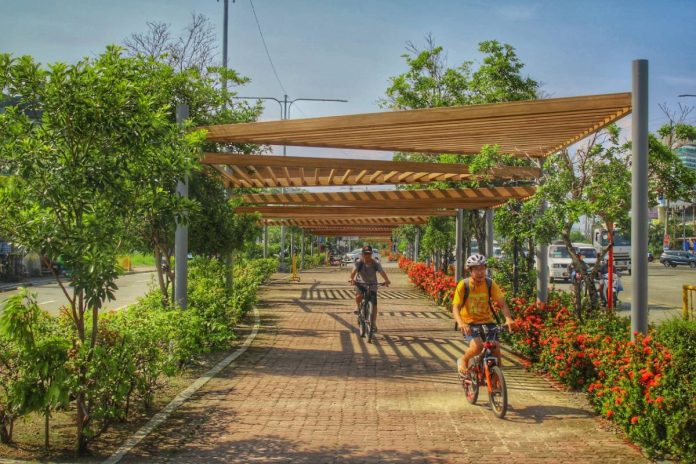
Tourists explore the area, students head home, workers commute, while cyclists, joggers and runners make their way along the road. Others simply walk, slow down and enjoy the city.
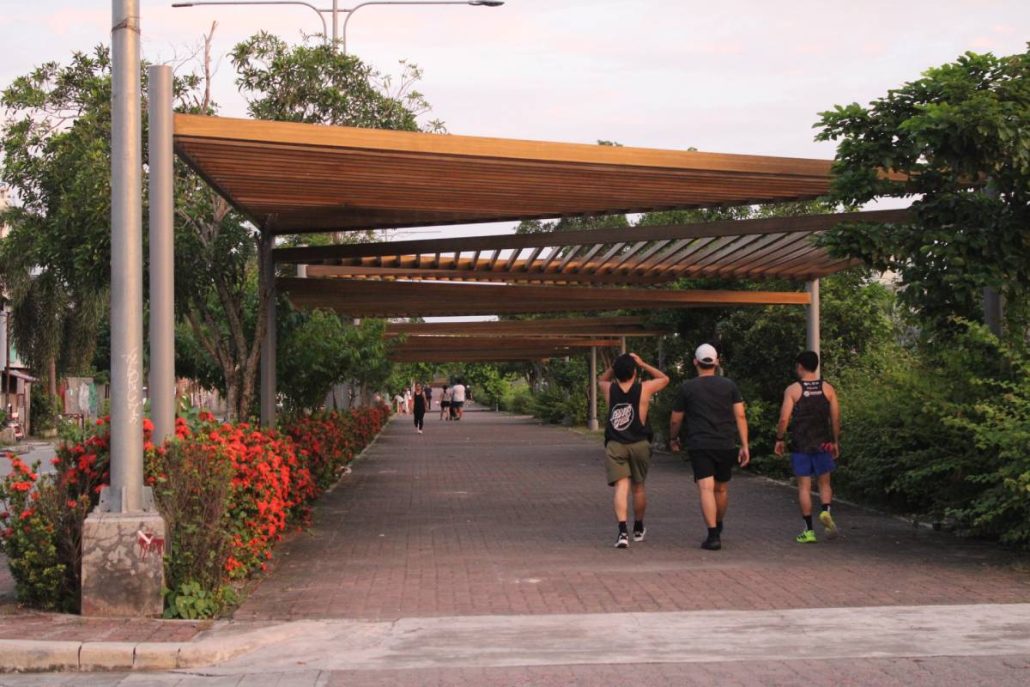
Now, new structures have joined this busy landscape: pergolas.
Newly constructed shade structures stand along portions of Diversion Road, particularly in Barangay Dungon A in Jaro and Barangay Bakhaw in Mandurriao. Featuring white posts, wood-toned slatted roofs and landscaped surroundings, the pergolas are designed to provide pedestrians with a more comfortable space.
But they are not yet complete in the way a pergola is traditionally imagined.
The structures are already built. What remains to complete the picture is something that cannot be installed overnight — greenery.
A framework waiting for nature
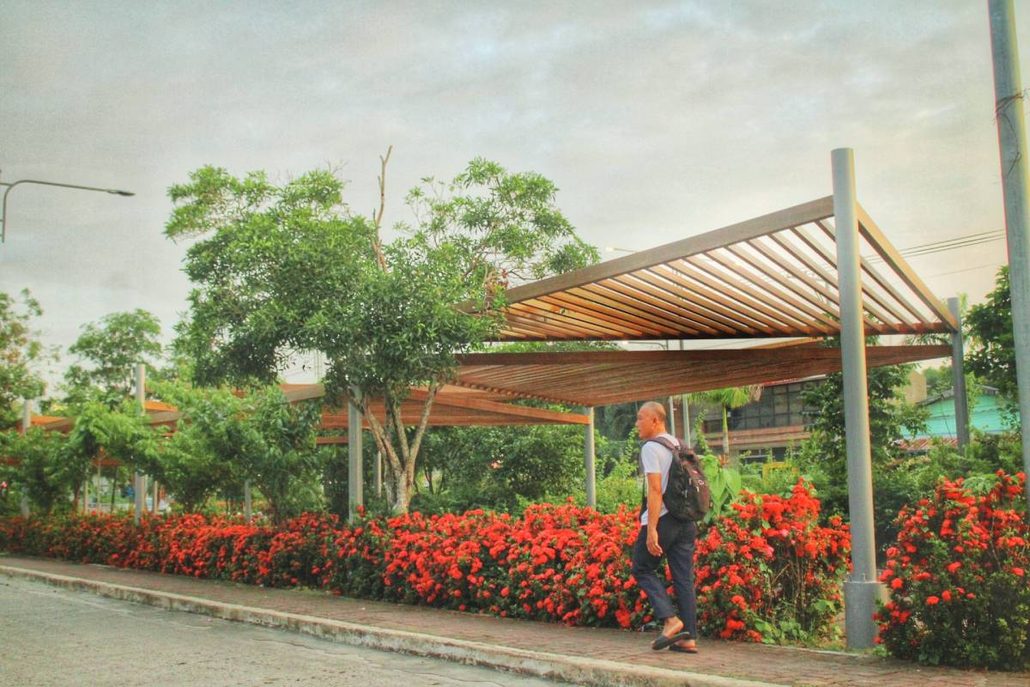
Imagine the pergolas months or years from now, with climbing plants slowly spreading across the slats, vines covering the posts and foliage filtering the afternoon sun.
A runner passes underneath after a workout. A student waits for a ride in the shade. An elderly resident takes an afternoon walk.
The structures could eventually become more than decorative additions to the streetscape. They could form part of Iloilo’s efforts to make walking and active mobility more comfortable.
In a tropical city, shade is not merely aesthetic. Shade is infrastructure.
For runners and pedestrians, shade can make walking and exercising more comfortable. For commuters, it can make waiting more bearable. More importantly, it can transform a stretch of pavement from a space people simply pass through into one they enjoy using.
The pergolas also have the potential to evolve with time. What are now simple structures could eventually become green, shaded corridors where architecture and nature meet.
A city made for walking
The idea fits Iloilo’s growing culture of walking and active mobility.
From the Iloilo River Esplanade and city proper to commercial districts and Diversion Road, people move at different speeds and for different reasons. Some are rushing to their destinations, while others are walking for exercise or leisure.
These public spaces remind us that a city is not only about roads, buildings and destinations. It is also about the spaces in between — sidewalks, bike lanes, waiting areas and shaded places where people can stop and rest.
This is why the pergolas deserve attention beyond their appearance.
Their real measure of success will come later — when plants climb over the structures, foliage becomes thicker, shade increases and people begin using the spaces because they make walking more pleasant.
Waiting for the green
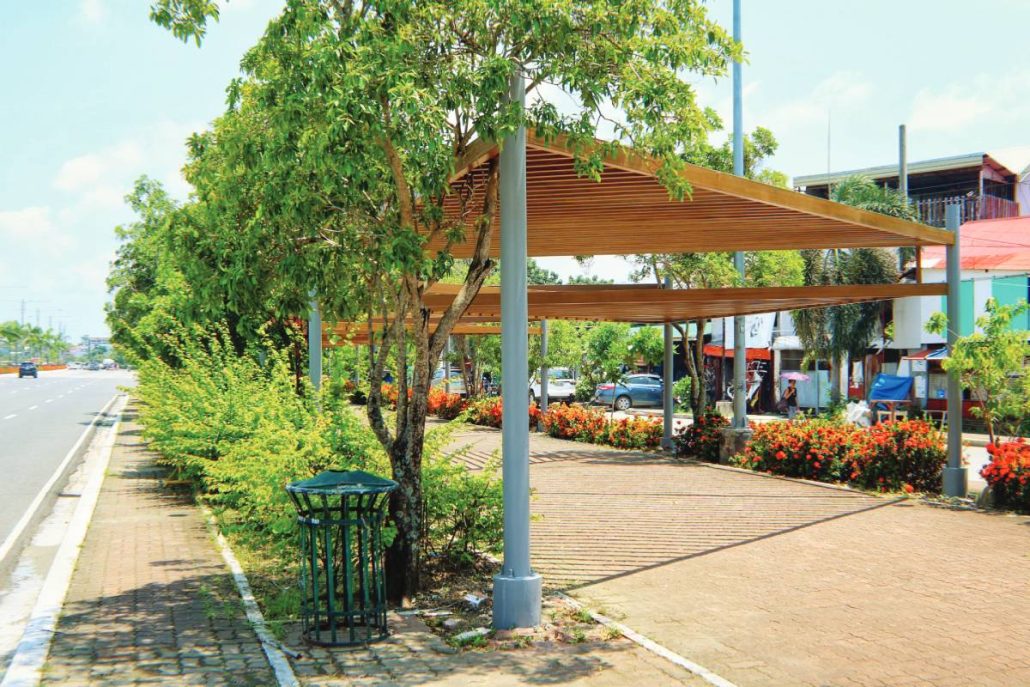
For now, the pergolas are still new. Their posts are clean, their wooden slats exposed and the plants have yet to cover them.
But perhaps that is what makes them interesting.
They represent the beginning of a vision.
If the greenery grows as intended, the pergolas could eventually become part of Iloilo’s green corridors — spaces where concrete, movement and nature come together.
A truly walkable city is not simply one where people can walk. It is one where people want to walk.
Where a runner enjoys the distance. Where a student does not mind walking a little farther. Where a tourist can experience the city on foot. And where an ordinary afternoon stroll becomes part of everyday life.
Someday, when vines have climbed, leaves have filled the spaces between the slats and the afternoon sun is softened by a canopy of green, people may look back at these structures and realize:
The pergolas were never meant to be the finished picture.
They were simply the framework for something greener./PN