
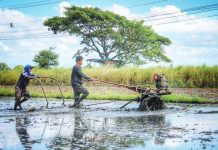



WESTERN Visayas posted a remarkable 6.4 percent economic growth in 2025, the highest among the country’s 18 regions, up from 4.4 percent in 2024. Yet inflation surged to 9.2 percent in September 2026, threatening to erode those gains.
That contrast shows that an economy can grow on paper while its people become poorer in practice.
Western Visayas may be the fastest-growing regional economy in the Philippines, but what good is that distinction if ordinary Ilonggos are struggling to put food on their tables, farmers remain trapped in poverty, and businesses are burdened by expensive electricity?
Economic growth is worth celebrating only when its benefits reach the people. Otherwise, impressive statistics become little more than trophies for government officials while families continue fighting a losing battle against rising living costs.
A recent warning from Department of Economy, Planning, and Development Undersecretary Carlos Bernardo Abad Santos should therefore serve as a wake-up call. Inflation is not merely an economic indicator. It is the shrinking purchasing power of a minimum-wage earner, the dwindling food budget of a struggling household, and the mounting production costs confronting farmers and small entrepreneurs. Every increase in prices diminishes the value of hard-earned income.
More worrisome is the region’s failure to fully capitalize on its agricultural wealth. Western Visayas produces valuable agricultural commodities, yet much of its produce leaves the region as raw materials. Others process these commodities, create higher-value products, generate additional employment, and capture profits that could have benefited local communities.
We produce the raw materials. Others reap much of the rewards. How long must Western Visayas remain a supplier of agricultural wealth instead of becoming a center of agricultural prosperity?
The answer lies in aggressive agro-industrial development. Government must encourage investments in food processing, manufacturing, storage facilities, modern farm infrastructure, and industries that transform agricultural produce into marketable finished products. Farmers should not remain permanently confined to the lowest-paying end of the economic value chain.
But industrialization cannot flourish when electricity is unreliable and prohibitively expensive. No serious investor will willingly establish a processing plant where power costs undermine competitiveness and supply interruptions threaten operations.
Affordable and dependable electricity is not a luxury. It is an economic necessity. The Regional Development Council, provincial governments, energy regulators, and power industry stakeholders must move beyond discussions and produce concrete, measurable solutions.
Western Visayas cannot afford complacency simply because it topped the country’s regional growth rankings. Yesterday’s achievement offers no guarantee against tomorrow’s economic decline. It must seize this moment to build a more productive, competitive, and inclusive economy.
The best gauge of economic progress is how many people rise with it. Until growth translates into affordable necessities, decent employment, profitable farms, and better living standards, Western Visayas’ economic success remains an unfinished story.
And for families struggling to survive, impressive growth statistics cannot be served for dinner.