


HOG PRODUCTION in Western Visayas increased by 20.4 percent in the first quarter of 2026, reaching 16,577 metric tons compared to 13,769 metric tons during the same period in 2025.
Data from the Philippine Statistics Authority (PSA) showed that while swine output grew, other major livestock sectors recorded declines. Carabao production went down by 12.0 percent, dropping to 1,738 metric tons from 1,974 metric tons in the same quarter last year. Cattle output decreased by 22.2 percent, representing a loss of 718 metric tons year-on-year. Goat production also fell by 18.7 percent, dropping from 800 metric tons to 650 metric tons.
Slaughterhouse data for the first quarter showed mixed trends across the region. A total of 110,690 hogs were slaughtered in local facilities, marking a 32.6 percent increase from the 83,477 heads recorded in the first quarter of 2025. Goat slaughtering surged by 84.2 percent, or an increase of 246 heads, totaling 538 slaughtered goats.
Conversely, carabao slaughtering dropped slightly by 1.4 percent compared to the previous year. The number of cattle slaughtered in regional facilities also decreased by 28.6 percent, recording 3,237 fewer heads than the first quarter of 2025.
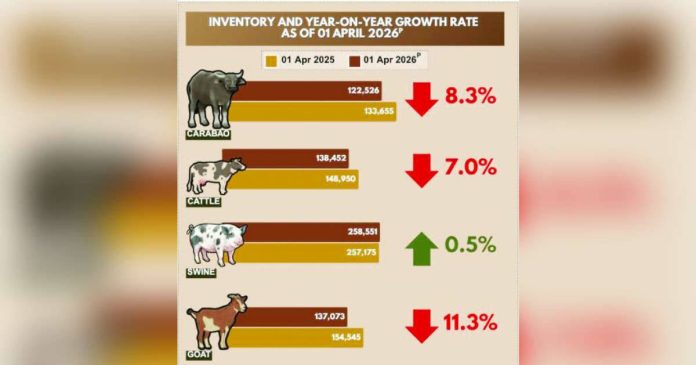
In terms of regional inventory, Iloilo held the largest share of the total livestock population in Western Visayas as of April 1, 2026. The province accounted for 45.9 percent of the regional carabao population (56,273 out of 122,526 heads), 30.9 percent of cattle (42,752 out of 138,452 heads), 29.2 percent of swine (75,537 out of 258,551 heads), and 42.6 percent of goats (58,372 out of 137,073 heads).
Antique and Capiz followed as the next largest contributors. Antique accounted for 22.7 percent of the carabao inventory, 35.1 percent of cattle, 34.7 percent of swine, and 19.3 percent of goats. Capiz held a 15.4 percent share for carabao, 17.5 percent for cattle, 14.8 percent for swine, and 22.7 percent for goats./PN