


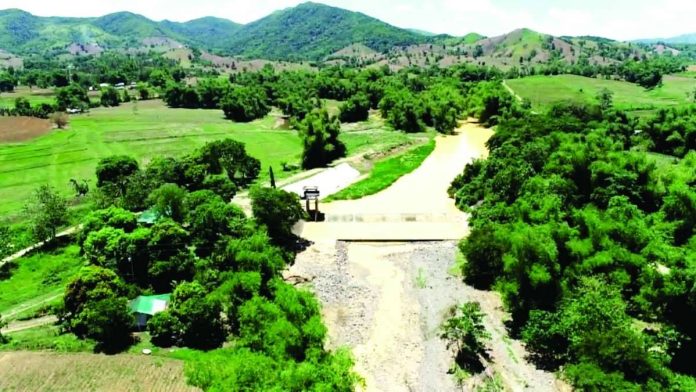
ILOILO City — Western Visayas’ food production faces risks, with six major river irrigation system (RIS) dams in Iloilo, Antique, Aklan, and Capiz having dropped to critical low water levels amid extreme heat ahead of a projected “Super El Niño”.
As soaring temperatures continue to dry up water sources feeding farmlands, the National Irrigation Administration (NIA) Region 6 warned that dwindling water supply in key irrigation systems could severely affect thousands of farmers and threaten agricultural productivity and food security.
Among the irrigation facilities now under critical status are the following:
* Barotac Viejo RIS Dam in Iloilo with only 0.50 marb water level remaining
* Sibalom Diversion Dam in Leon, Iloilo at 1.7 marb
* Tipulan Dam in Antique
* Solong Dam in Antique
* Panakuyan RIS in Aklan, and
* Mambusao RIS Dam in Capiz
“NIA is mandated to deliver water to farmlands. But the water sources indi control sang agency,” said Raffy Hilario, NIA-6 public relations officer.

“Kon may El Niño, grabe ang absorption sang tubig sa lupa, ma-lessen gid ang water supply. Ang isa sa mga problems dira, wala kita may makuha nga tubig sa aton mga suba or water sources,” he explained.
The onset of the wet season this June may still not immediately ease the pressure on irrigation systems, added Hilario, citing the Philippine Atmospheric Geophysical and Astronomical Services Administration’s (PAGASA) projection placing parts of the country under extreme heat conditions and possible El Niño effects.
“Month of May nagabukas na ang aton irrigation systems for the upcoming wet season kay June tig-ululan gid na. (But) according sa PAGASA , may Super El Niño,” Hilario stressed.
To cushion the impact, NIA-6 has activated a mitigation plan that includes revised cropping calendars, stricter water delivery schedules, alternate wetting and drying technology, rotational irrigation, and crop diversification.
“This also calls for proper coordination with local government units, other agencies, and farmers,” Hilario said.
The agency is also urging farmers to shift to short-maturing and drought-resistant crops to reduce dependence on water-intensive rice production.
“Mungbeans, for example, can sustain farmers during dry spells,” Hilario said.
NIA-6 emphasized that “critical low level” does not mean irrigation dams have completely dried up, but warned that available water is already dangerously limited and requires careful management.
It thus called on irrigators’ associations and farmers to strictly follow water schedules and coordinate closely with government agencies for crop insurance, technical support, and access to agricultural assistance programs.
“We are calling for full cooperation among all stakeholders to ensure that decisions on planting and crop management are well-informed,” Hilario said./PN