


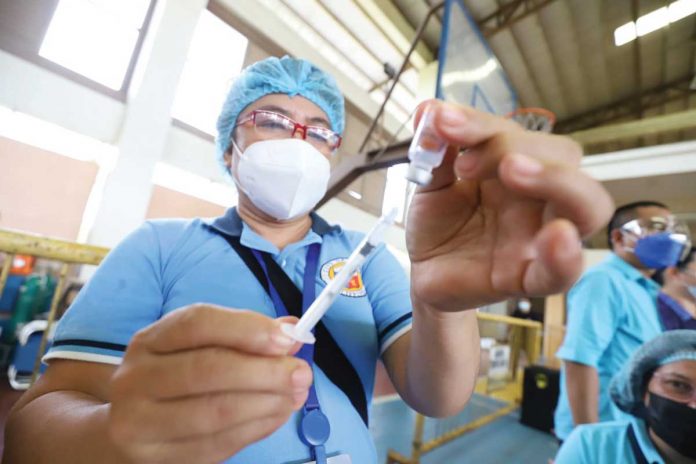
ILOILO City – One highly-urbanized city and three provinces in Western Visayas have so far started vaccinating against coronavirus disease 2019 (COVID-19) their A3 priority group or residents with comorbidities.
These are Iloilo City and the provinces of Antique, Iloilo and Negros Occidental, according to Dr. Bea Camille Fillaro-Natalaray, medical officer IV of the Department of Health (DOH) Region 6.
As of May 1, 667 persons with comorbidities under the A3 priority group from the said areas have been administered with Sinovac Biotech’s CoronaVac vaccine and only one with AstraZeneca.
These comprised 1.68 percent of the 39,718 persons with co-morbidities master-listed under A3 priority group, Natalaray said.
Meanwhile, under Department Memorandum No. 2021-0175, DOH-6 enumerated examples of comorbidities included in the vaccination priority list. These were:
* Chronic respiratory disease and infection such as asthma and respiratory allergies, chronic obstructive pulmonary disease, interstitial lung diseases, cystic fibrosis, or pulmonary hypertension, pulmonary tuberculosis, chronic bronchitis, histoplasmosis, bronchiectasis
* Cardiovascular disease such as hypertension, coronary heart diseases, cardiomyopathies, peripheral artery disease, aortic diseases, rheumatic heart disease, congenital heart disease;
* Chronic kidney disease;
* Cerebrovascular diseases such as stroke and transient ischemic attack;
* Cancer of malignancy;
* Diabetes mellitus type 1 and 2;
* Obesity;
* Neurologic diseases such as dementia, Alzheimer’s Disease, Parkinson’s Disease, epilepsy and seizures, Bell’s palsy, Guillain-Barre Syndrome, or acute spinal cord injury;
* Chronic liver disease such as hepatitis cirrhosis, non-alcoholic fatty liver disease;
* Immunodeficiency states such as genetic immunodeficiencies, secondary or acquired immunodeficiencies (i.e. prolonged use of corticosteroids), HIV infection, solid organ or blood transplant patients; and
* Other diseases such as sickle cell disease, thalassemia, or Down syndrome.
Meantime, other disease conditions not included in the list but belonged to the general category of conditions are also eligible under the A3 priority group, the DOH memorandum also underscored.
According to the Inter-Agency Task Force for the Management of Emerging Infectious Diseases (IATF-EID), frontline healthcare workers in both national and local from private and public facilities, health professionals and non-professionals like students, nursing aides, janitors, and barangay health workers belong to priority group A1.
Senior citizens are under priority group A2, while persons with comorbidities are under priority group A3; under priority group A4 are frontline personnel in essential sectors, including uniformed personnel and indigents fall under Priority Group A5.
Teachers and social workers belong to priority group B1, other government workers and essential workers are listed under priority groups B2 and B3, respectively.
Under priority group B4 are socio-demographic groups at “significantly higher risk other than senior citizens and indigenous people,” while overseas Filipino Workers and other remaining workforce fall under priority groups B5 and B6, respectively.
The rest of the Filipino population is under priority group C./PN