


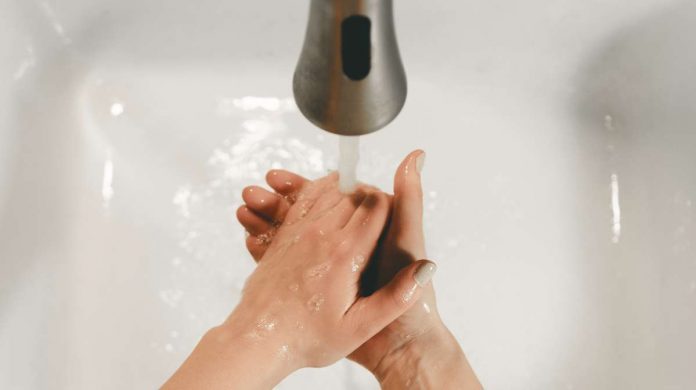
The Department of Education (DepEd) and Department of Health (DOH) renewed their commitment to promote hand washing in schools and communities, together with other health measures, to ensure safe school reopening and reduce disease transmission in public settings.
To mark this renewal, DepEd and DOH, in collaboration with UNICEF and WHO, co-convened the 2021 Global Hand washing Day Symposium: “Malinis na Kamay para sa Kinabukasan ng Bayan” to feature good practices on promoting hand washing across schools, communities and workplace settings amid the pandemic.
This year’s joint celebration of the GHD follows the issuance of the first Joint Memorandum Circular between the DepED and DOH on the “Operational Guidelines on the Implementation of Limited face-to-Face Learning Modality” in support of the piloting of school reopening in 120 schools.
“Even before the pandemic, DepEd has already encouraged hand washing habits for our learners through our Water, Sanitation and Hygiene in Schools (WinS) program. As we embark on piloting face-to-face classes, DepED recognizes that safe return to school requires in particular, among other measures, observance of hand washing practice. Amid the challenges of this pandemic, our commitment to create a culture of hand washing in schools remains strong. We call on our partners in the local government and private sector to support improvement of facilities and sustainability of supplies in schools,” DepEd Secretary Leonor Briones says.
Aside from helping prevent COVID-19 transmission, hand washing with soap also prevents other diseases. Studies have shown that hand washing can reduce diarrheal diseases by 30% and acute respiratory infections by up to 20%. A recently released State of the World Hand Hygiene report shows that an estimated half a million people globally die each year from diarrhea or acute respiratory infections which could have been prevented with good hand hygiene [iii]. In the context of the Philippines, hand washing supports the reduction, prevention and elimination of stunting among 30% of children under five.
“DOH recognizes the importance of hand washing, not just in the context of the pandemic but in reducing other infections. There is much to gain health-wise in doing the simple act of hand washing with soap. We at the DOH are committed to promoting proper hand washing behaviors to make it a sustained habit amongst Filipinos. We call on other government agencies, local government units, civil society and private sector partners to also encourage proper hand washing practice across different settings,” DOH Secretary Francisco Duque III says.
One of the ways that both DOH and DepEd are encouraging hand washing behavior is through the use of behavioral nudges or simple cues in the environment that can encourage healthy behaviors. In a collaborative study led by DepEd and UNICEF in Zamboanga del Norte, hand washing practice of students increased by 17.3 percentage points due to nudges that lead to hand washing stations. Nudges used include footprints leading to hand washing stations, posters, eye stickers and arrows pointing to soap.
Building on the results of that study as well as global evidence on nudges, DOH, in partnership with UNICEF, launched the WASH o’clock campaign to remind people to wash their hands during critical moments and as they move about in their communities. The campaign includes installation of signage’s and public hand washing stations to nudge people to wash their hands in markets, malls, transport hubs, government offices, churches and health centers.