



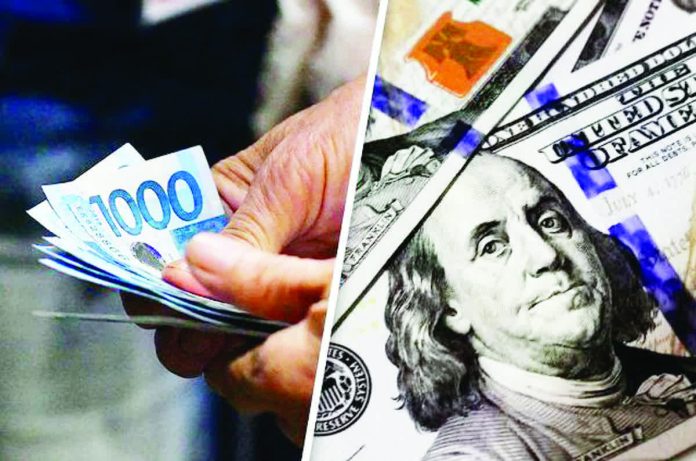
A WIDENING corruption scandal and rising global trade uncertainty are clouding the Philippines’ foreign investment outlook, even as a weaker peso offers limited relief to the country’s external position, according to BMI, a research unit of Fitch Solutions.
BMI said it sees the peso at around P59 to $1 by end-2025 and P59.50 by end-2026, with the weaker peso currently providing modest support to the trade balance in 2026.
The local currency touched a historic low of P59.17 earlier this month. The peso has also come under pressure, weakening 6.6 percent from its May peak to P58.90 to the US dollar as of November 20, BMI said. The Bangko Sentral ng Pilipinas is forecast to cut rates by 25 basis points in December following slower third-quarter growth, a move that could narrow the policy rate gap with the United States and keep the currency on a depreciating path.
The research firm also noted that foreign direct investment (FDI) has continued to lose momentum through 2025, with inflows sliding to 1.3 percent of gross domestic product (GDP) in the second quarter, well below the 2.5 percent pre-pandemic norm.
Investor sentiment deteriorated further after President Ferdinand Marcos Jr. flagged irregularities in flood-control projects in his July State of the Nation Address, adding to concerns over escalating global trade tensions. FDI plunged 40.5 percent year-on-year in August and is expected to remain subdued into 2026.
The softer currency has helped temper the current account deficit, which narrowed to about 3.1 percent of GDP in the first half from 4.0 percent in 2024 on the back of resilient exports. But the US “reciprocal” 19 percent tariff, imposed in August, has begun weighing on shipments, with exports to the United States edging down 0.3 percent in the third quarter.
Remittances, another key external buffer, also face risks from tighter US immigration policies and a new 1 percent remittance tax. While ongoing bilateral talks could ease tariff pressures, analysts say uncertainty in US trade policy continues to pose significant downside risks to the Philippines’ external outlook. (ABS-CBN News)