

ILOILO – The magnitude 4.8 earthquake that jolted Iloilo on the evening of March 2 has prompted calls for the construction of earthquake-resilient public infrastructure to prevent large-scale casualties in the future.
Provincial Disaster Risk Reduction and Management Office (PDRRMO) chief Retired Police Colonel Cornelio Salinas said the tremor underscored the need for engineers and government agencies to ensure that newly constructed roads, bridges, buildings and other critical infrastructures are capable of withstanding strong earthquakes.
According to Salinas, lessons learned from seismic incidents over the past year highlight the importance of structural integrity in public infrastructure to minimize damage and casualties when strong earthquakes strike.
All government buildings and critical infrastructure facilities across Western Visayas are now under mandatory structural inspection following Monday’s earthquake that struck Guimbal, Iloilo and shook Panay and Guimaras islands, prompting regional disaster authorities to move swiftly to prevent further risks to public safety.
Regional Disaster Risk Reduction and Management Council (RDRRMC) chairperson and Office of Civil Defense (OCD) Region 6 director Raul Fernandez directed all local DRRM councils, heads of offices, and stakeholders to immediately conduct structural integrity assessments within their respective jurisdictions.
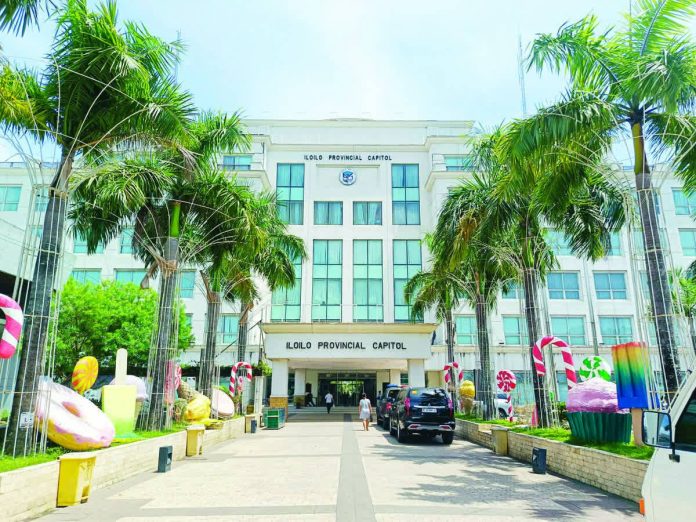
Salinas cited the Iloilo Provincial Capitol as an example of a structure designed to withstand a powerful quake, noting that the building can endure an earthquake as strong as magnitude 8.
Salinas also said the country may draw lessons from international models in constructing quake-resistant buildings.
“It can be a Japanese model, it can be a Taiwanese model of buildings para malikawan ang daku nga causualties. Pag nag collapse (ang mga) structures dira na kita maka-incur sang daku nga casualties,” he added.
He explained that unlike floods, which often give residents time to prepare and evacuate, earthquakes occur without warning, making the structural strength of buildings crucial to saving lives.
“Ang naga-problema sina ang aton regulatory agencies. There will be blood in their hands if a building collapses due to substandard materials nga gin gamit sa bridges, road networks, and critical infrastructures,” Salinas said.
The strongest earthquake to strike Panay Island – and Iloilo city and province for that matter – hit on January 25, 1948 — a magnitude 7.8 tremor that came to be known as the “Lady Caycay” quake.
With its epicenter near Anini-y, Antique, the quake registered a Mercalli intensity of X (“Extreme”), tearing open fissures as wide as four meters across Iloilo and Antique.
The shaking even triggered a small tsunami along the Iloilo Strait.
At least 21 people were killed and 43 others injured. Fifty-five Spanish-era churches were damaged, 17 of them collapsing entirely.
The “Lady Caycay” earthquake showed that the West Panay Fault, a 90-kilometer northwest-southeast trending fault traversing Antique, Aklan, Capiz, and Iloilo, is active.
Meanwhile, the Iloilo Provincial Capitol was declared structurally safe following a rapid visual inspection conducted by civil and structural engineers of the provincial government on the morning of March 3.
Provincial Engineer Romeo Andig reported that engineers inspected the six‑storey capitol building and found no new cracks or structural defects related to the earthquake.
“Wala may na-develop nga cracks in reference to the earthquake that occurred last night. No noticeable defects along the structural members of the buildings. Ang mga cracks nga nakita naton as is man sia gihapon. So, in view of that we declare that the building is structurally safe for now,” Andig said.
Despite the positive inspection results, Salinas reminded employees, personnel and visitors at the capitol to immediately evacuate to the designated assembly area in front of the National Museum of the Philippines – Western Visayas if aftershocks occur.
He also urged the public to internalize the earthquake safety protocol “duck, cover and hold” and to remain calm during emergencies.
“Do not run, just walk graciously para at least indi man kamo magbinunggoanay. Kun nagadinalagan kita it would create a stamped and it would lead to mass casualty. So, likawan naton. Just go on with the protocols nga ginatudlo sa inyo during earthquake drills and that should be part of our condition reflex,” Salinas said.
The provincial government also issued an earthquake safety guide reminding residents of the proper steps before, during and after a tremor, including preparing emergency kits, identifying safe areas, and checking for hazards after the shaking stops./PN