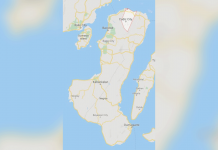


BACOLOD City — A consumer advocacy group has filed a complaint with the Department of Energy (DOE), urging immediate government intervention over what it described as “oppressive” electricity rates in the Negros Island Region (NIR).
In a letter dated May 4, 2026, the Alliance of Concerned Consumers in Electricity and Social Services (ACCESS) called on Energy Secretary Sharon S. Garin to address what it alleged are excessive generation and transmission charges imposed by power industry players.
The complaint names power generation companies (GenCos), the National Grid Corporation of the Philippines (NGCP), and the Wholesale Electricity Spot Market (WESM), which is operated by the Philippine Electricity Market Corporation (PEMC).
ACCESS anchored its complaint on Republic Act No. 9136, or the Electric Power Industry Reform Act (EPIRA), particularly Section 37, which mandates the DOE to ensure reliable and reasonably priced electricity.
ACCESS president Wennie Sancho said WESM prices in the Visayas grid ranged from P14 to P18 per kilowatt-hour (kWh) from January to April 2026, with spikes reaching the P32 per kWh cap during periods of yellow and red alerts.
“These elevated rates are directly passed on to consumers in Negros,” Sancho said.
The group argued that the pricing trends run counter to EPIRA’s mandate for reasonable electricity rates and reflect gaps in regulatory oversight.
ACCESS also criticized NGCP for allegedly continuing to charge full transmission rates despite the incomplete Cebu-Negros-Panay (CNP) 230-kilovolt (kV) backbone project. The group said delays in the project have contributed to grid congestion and higher system losses, which are ultimately borne by consumers.
“Charging for undelivered reliability is contrary to public interest,” Sancho said.
The group likewise raised concerns over what it described as PEMC’s failure to implement safeguards, such as secondary price caps and stricter market controls, amid sustained high prices in what it called a supply-deficient and effectively isolated grid.
Sancho noted the growing burden on households, saying generation and transmission charges now account for more than 60 percent of electricity bills in the region.
He added that a minimum wage earner earning about P550 daily may spend between P3,200 and P3,800 monthly on electricity—equivalent to roughly 23 percent of income—without access to subsidies.
“This is consumer impoverishment, not cost recovery,” the group said.
In its complaint, ACCESS urged the DOE to adopt several measures, including the capping generation offers at P6.50 per kWh for the second and third quarters of 2026; suspending transmission rate adjustments in the NIR pending completion of key grid infrastructure; imposing stricter price controls within WESM, including a review of the P32 per kWh cap; holding a public hearing in Bacolod City within 30 days; and declaring a state of power crisis in the region to enable emergency measures
The group also requested a dialogue with the DOE within 10 days to discuss time-bound solutions.
ACCESS said the complaint seeks to exhaust administrative remedies while recognizing the DOE’s primary role in energy policy enforcement. It added that continued inaction may prompt escalation to the Energy Regulatory Commission for formal adjudication./PN