



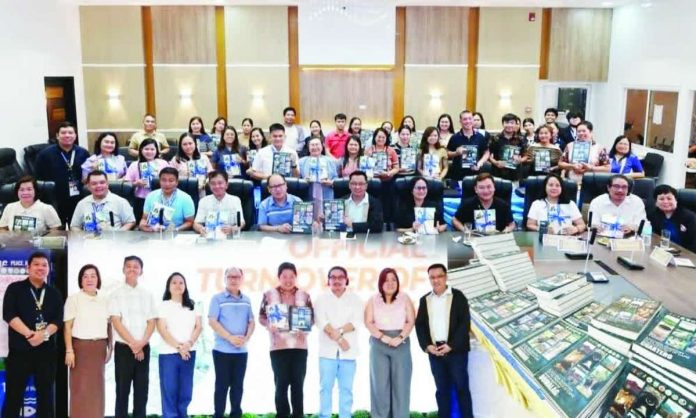
CAPIZ — Local government units (LGUs) across Capiz received comprehensive cultural mapping inventories documenting the province’s rich heritage during a technology transfer ceremony held on May 26 at the main campus of Capiz State University (CAPSU).
Dubbed “Pagbuklad: The Technology Transfer of the Cultural Mapping Project,” the event marked a significant milestone in the preservation and promotion of Capiz’s cultural heritage through the Cultural Mapping of Panay and Guimaras (CMPG) Project.
Funded by the Office of Senator Loren Legarda, the CMPG is part of the implementation of the revised National Cultural Heritage Act of 2009. The project seeks to identify, document, and preserve the cultural assets of Panay and Guimaras.
The initiative was spearheaded by a team from the University of the Philippines Visayas (UP Visayas), headed by project leader Anna Razel L. Ramirez and project manager Prof. Martin Genodepa.
CAPSU served as the lead institution for the cultural mapping project in Capiz in partnership with the Provincial Government of Capiz through the Provincial Tourism and Cultural Affairs Office (PTCAO). The undertaking also involved researchers and cultural mappers from PTCAO and all municipalities across the province.
“This cultural mapping project is far more than an academic exercise—it is a profound act of preservation that safeguards the identity, memory, and future of our province,” said Dr. Leo Andrew B. Biclar, CAPSU vice president for Research, Development and Extension.
The cultural mapping initiative documented a wide range of heritage resources, including natural heritage, built heritage, movable heritage, intangible cultural heritage, significant personages, and cultural institutions.
According to CAPSU, the project reflects the university’s commitment to preserving and promoting the diverse cultural identities of Capiz.
CAPSU President Dr. Efren L. Linan underscored the significance of the published inventories and cultural heritage volumes.
“These publications remind us that culture is not merely a memory of the past; it is a guide for the future. Every page becomes an act of preservation, and every documented tradition becomes proof that the identity of a Capisnon remains alive and meaningful,” Linan said.
The ceremony also featured the launch of two new publications, “Sugilanon: Capiz Folklore” and “Mga Duog sa Capiz,” which further document the province’s stories, traditions, and significant places.
Copies of the cultural inventories and newly launched books were distributed to all LGUs in Capiz, the Provincial Government of Capiz, the Capiz Provincial Library, the Department of Education (DepEd)-Capiz, DepEd-Roxas City, and the offices of the province’s first and second congressional districts.
Among those who attended the event were Capiz Human Resource Management Officer and Information Officer Atty. Luvim Amores, Provincial Tourism Officer Alphonsus “Al” Tesoro, Dr. Roel Bermejo of DepEd-Capiz, Adonis Mosquera of the DepEd-Roxas City Division, and representatives from Congress and the Office of Senator Legarda.
Project proponents said the cultural mapping initiative serves as a vital repository of Capiz’s heritage and provides a foundation for future cultural development programs. They added that the project aims to strengthen Capisnons’ appreciation of the traditions, history, and identity that define the province./PN