

[av_one_full first min_height=” vertical_alignment=” space=” custom_margin=” margin=’0px’ padding=’0px’ border=” border_color=” radius=’0px’ background_color=” src=” background_position=’top left’ background_repeat=’no-repeat’ animation=”]
[av_heading heading=’City bats for sustainable urban agri’ tag=’h3′ style=’blockquote modern-quote’ size=” subheading_active=’subheading_below’ subheading_size=’15’ padding=’10’ color=” custom_font=”]
BY GLENDA SOLOGASTOA
[/av_heading]
[av_textblock size=” font_color=’custom’ color=’#0a0a0a’]
Monday, February 13, 2017
[/av_textblock]
[av_textblock size=” font_color=’custom’ color=’#0a0a0a’]
ILOILO City – The city government is scouting for an area suitable for urban agriculture.
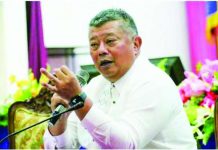
City Agriculturist Romulo Pangantihon met Agriculture undersecretary Evelyn Laviña recently and presented project proposals.
“We’re planning container gardening and micro-enterprising,” said Pangantihon.
Urban agriculture should not be limited to meeting public consumption. It must also cover micro-enterprising so that people will be encouraged to engage in it, he explained.
“It was emphasized to us by Undersecretary Laviña the importance of the proposed project’s sustainability,” said Pangantihon.
The Food and Agriculture Organization (FAO) of the United Nations defines urban agriculture as the growing of plants and raising of animals within and around cities. Urban agriculture provides food products from different types of crops, animals as well as non-food products.
The rapid growth of cities in the developing world is placing enormous demands on urban food supply systems. FAO said urban agriculture can provide fresh food, generate employment, recycle urban wastes, create greenbelts, and strengthen cities’ resilience to climate change.
Under the City Agriculture Office’s Integrated Food Production Program, Pangantihon said, they have identified 11 plant varieties that can be grown in households.
Laviña, however, recommended that the office identify areas for specific plants to cultivate.
“She suggested there should be specialization – which area to grow which plant,” said Pangantihon.
According to FAO, vegetables have a short production cycle; some can be harvested within 60 days of planting, so are well suited for urban farming.
It also said urban vegetable growers spend less on transport, packaging and storage, and can sell directly through street food stands and market stalls, thus more income goes to them instead of middlemen./PN
[/av_textblock]
[/av_one_full]