



EVERY time floodwaters rise, government follows a familiar script: evacuate families, open evacuation centers, distribute food packs, wait for the water to recede, send residents home — and repeat the exercise when the next flood comes.
The Iloilo Provincial Government’s Purok Resilience Program offers a more sensible proposition: What if vulnerable families did not have to keep running from the same danger in the first place?
Thirty-two families living near the flood-prone Batiano River in Oton, Iloilo are set to be relocated to safer ground through a P40-million housing project in Barangay Botong. Fifteen beneficiaries come from Poblacion North, 10 from Tagbak Sur and seven from San Antonio.
This is the kind of disaster-risk reduction policy local governments should increasingly pursue as extreme weather and recurring flooding expose the limitations of evacuation-centered responses.
Gov. Arthur Defensor Jr. made an important point: evacuation centers can cost as much as P35 million. They are necessary, certainly. Communities will always need safe temporary shelters when typhoons, floods, earthquakes and other emergencies strike.
But evacuation centers should be the safety net, not the permanent answer to a permanent problem.
If government already knows that particular families live in danger zones and will be evacuated whenever the river rises, why should public policy end with repeatedly moving them temporarily from danger and returning them afterward to exactly the same vulnerable location?
That cycle consumes public money without eliminating the underlying risk.
Permanent relocation, when properly planned and carried out with the participation of affected families, attacks the problem at its root. Instead of spending indefinitely on evacuation, relief and recovery for the same vulnerable households, government invests in giving them a safer place to live. The Purok Resilience concept is therefore worth expanding.
But there is an important warning: relocation cannot simply mean houses. A family moved away from a flood zone but also moved far from employment, schools, transportation, healthcare and sources of livelihood may become physically safer while becoming economically more vulnerable.
This is why the provincial government’s plan to seek partnerships with national agencies for livelihood assistance is crucial. Housing, utilities, drainage, roads, transportation and economic opportunities must develop together. A resilient community must allow people not merely to survive disasters but to live decently afterward.
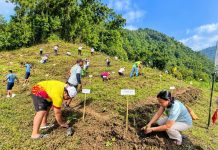
The Batiano initiative carries another significance. Relocating vulnerable families is being pursued alongside efforts to rehabilitate the river through the Balik-Batiano River Development Project, including mangrove restoration, pollution and solid-waste interventions and other nature-based solutions. That is how resilience should work: protect the people and repair the environment simultaneously.
Government cannot endlessly dredge waterways while allowing pollution to continue. It cannot repeatedly evacuate residents while allowing permanent settlement in known danger zones. And it cannot build houses without ensuring that relocated families can sustain themselves there.
The first Purok Resilience community in Barangay Nangka, Batad benefited 30 families. Oton adds another 32. These may appear modest numbers against the many households exposed to floods and other hazards across Iloilo, but the principle behind them is potentially transformative. The province should identify other communities where the same model can reasonably be applied, particularly places with chronic flooding, riverbank erosion and other recurring hazards.
An evacuation center saves a family for a night. A safe home can protect that family for generations.