



ARTIFICIAL intelligence (AI) is rapidly transforming healthcare, and dentistry is no exception.
Once considered a field reliant primarily on manual skill and traditional diagnostic methods, oral health care is now embracing AI technologies that promise faster, more accurate diagnoses, personalized treatment plans, and improved patient outcomes.
AI’s impact in dentistry is most evident in diagnostic imaging. Dental X-rays, CT scans, and intraoral photographs generate vast amounts of data that can be challenging for clinicians to interpret consistently. AI-powered software, however, can analyze these images with remarkable precision.
Using deep learning algorithms, AI systems can detect early signs of cavities, gum disease, oral cancer, and other dental conditions—often before they become visible to the human eye.
Studies suggest that AI can achieve diagnostic accuracy comparable to, or even surpassing, experienced dentists, reducing the risk of misdiagnosis and enabling earlier intervention.
Beyond diagnostics, AI is reshaping treatment planning. Personalized dental care is increasingly possible as AI systems integrate patient histories, genetic information, and lifestyle factors to recommend tailored interventions.
For example, AI can predict which patients are more likely to experience tooth decay or periodontal disease based on patterns in their dental records and oral microbiome data.
Such predictive insights allow dentists to prioritize preventive care, minimizing costly procedures and enhancing long-term oral health.
AI is also making patient interaction more efficient. Virtual dental assistants powered by AI can answer routine questions, schedule appointments, and provide oral hygiene advice around the clock.
These tools improve patient engagement, particularly for individuals in remote or underserved areas, who may have limited access to dental clinics.
Moreover, AI-driven chatbots can deliver personalized oral health education, reinforcing preventive measures like proper brushing and flossing techniques.
In dental research, AI accelerates innovation by analyzing vast datasets that were previously unmanageable. Researchers can identify correlations between lifestyle habits, genetic markers, and oral diseases, leading to new treatment approaches and preventive strategies.
AI also supports the development of advanced dental materials and technologies, from smarter aligners for orthodontics to precision-guided implants.
Despite these advances, integrating AI into oral health care comes with challenges. Data privacy and cybersecurity are paramount, as AI relies on extensive patient information. Ethical concerns also arise regarding the transparency of AI algorithms and the potential for bias in training datasets.
Dentists must remain vigilant to ensure that AI supplements, rather than replaces, professional judgment.
Looking ahead, the fusion of AI and dentistry promises a new era of proactive, patient-centered oral health care.
By combining technological innovation with clinical expertise, AI offers the potential to detect diseases earlier, personalize treatment, and empower patients to take control of their oral health.
As the technology continues to evolve, one thing is clear: the future of dentistry will be smarter, faster, and more accessible than ever before.
***
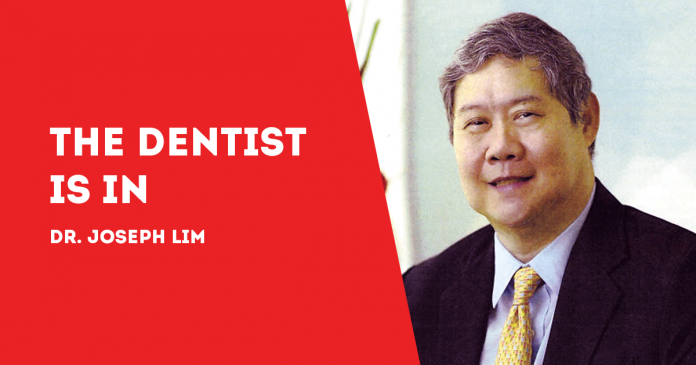
Dr. Joseph D. Lim, Ed. D., is the former Associate Dean of the College of Dentistry, University of the East; former Dean, College of Dentistry, National University; Past President and Honorary Fellow of the Asian Oral Implant Academy; Honorary Fellow of the Japan College of Oral Implantologists; Honorary Life Member of the Thai Association of Dental Implantology; and Founding Chairman of the Philippine College of Oral Implantologists. For questions on dental health, e-mail jdlim2008@gmail.com or text 0917-8591515.
***
Dr. Kenneth Lester Lim, BS-MMG, DDM, MSc-OI, graduated Doctor of Dental Medicine, University of the Philippines, College of Dentistry, Manila, 2011; Bachelor of Science in Marketing Management, De la Salle University, Manila, 2002; and Master of Science (MSc.) in Oral Implantology, Goethe University, Frankfurt, Germany, 2019. He is an Associate Professor; Fellow, International Congress of Oral Implantologists; and Fellow, Philippine College of Oral Implantologists. For questions on dental health, e-mail limdentalcenter@gmail.com./PN