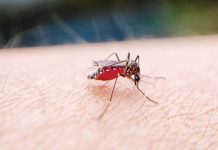



KALIBO, Aklan – Although Aklan has been declared free from lymphatic filariasis, the Provincial Health Office (PHO) is wary that the mosquito-borne disease could reemerge.
Lymphatic filariasis, commonly known as elephantiasis, is a parasitic infection and the second leading cause of permanent and long-term disability.
The disease leads into lymphoedema (tissue swelling) or elephantiasis (skin/tissue thickening) of limbs and scrotal swelling.
Ten years ago, the Department of Health survey tagged Aklan as a “moderately endemic province” for lymphatic filariasis, with a microfilariae rate of 6.20 percent.
To reduce the prevalence of infections, Aklan conducted a Mass Drug Administration (MAD) using Diethylcarbamazine Citrate (DEC) and Albendazole for a minimum of five years to individuals aged two years old and above living in established endemic areas.
In 2019, PHO-Aklan had its own Transmission Assessment Survey (TAS) in Batan, Madalag and Libacao towns to determine whether infection had been reduced to levels below the critical cut-off threshold among children six to seven years old.
In 2020, TAS was conducted throughout Aklan targeting children aged six to seven years old. Blood samples taken produced negative results for the parasitic infection.
Also, results of a nocturnal survey (night blood survey) for 500 samples also had less than one percent of occurrence of lymphatic filariasis.
PHO-Aklan Filariasis Program Coordinator Roger Debuque said the filariasis awareness month is observed every November pursuant to Executive Order No. 369 of 2004 of then President Gloria Macapagal-Arroyo./PN