

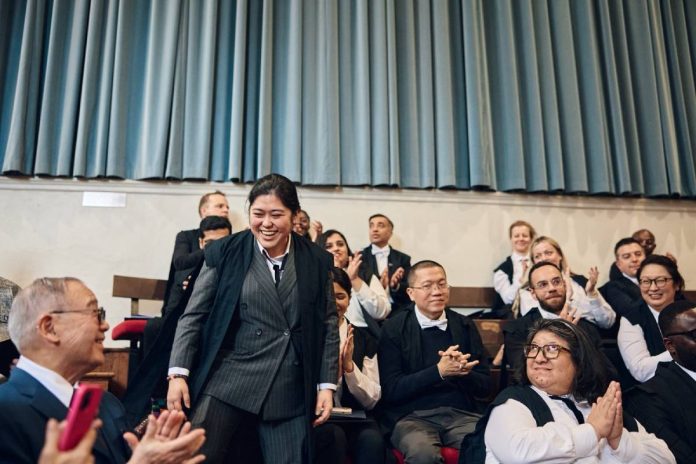
Oxford, United Kingdom — For Anna Mae Yu Lamentillo, the moment she stood at Oxford was not defined solely by academic achievement, but by something far more personal: identity, language, and the journey from her roots as a member of the Hiligaynon, Karay-a ethnolinguistic group to a global stage.
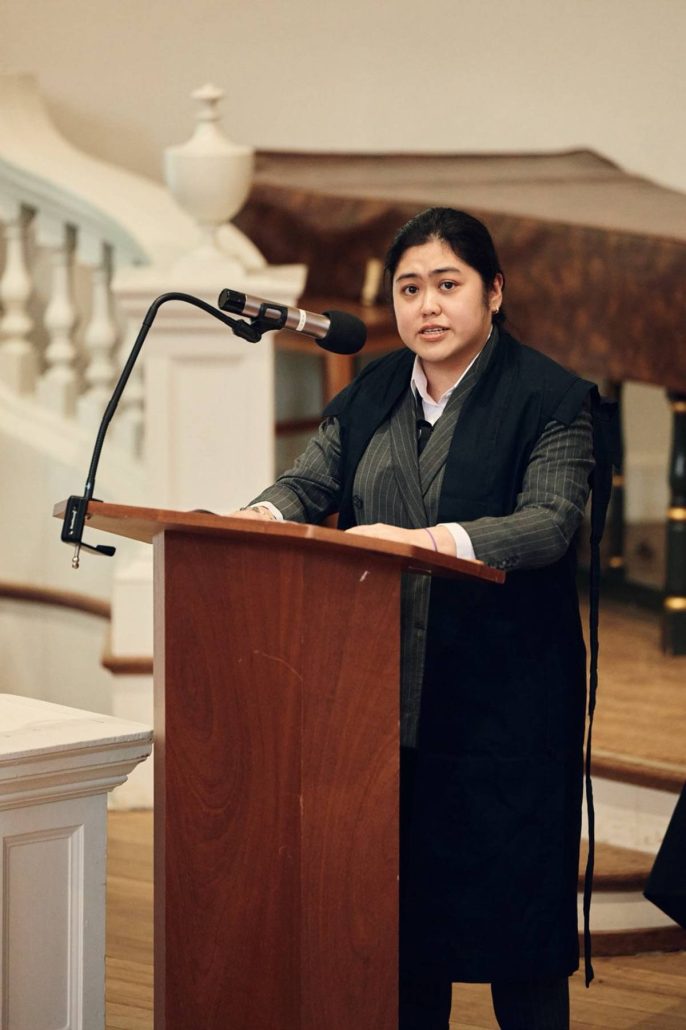
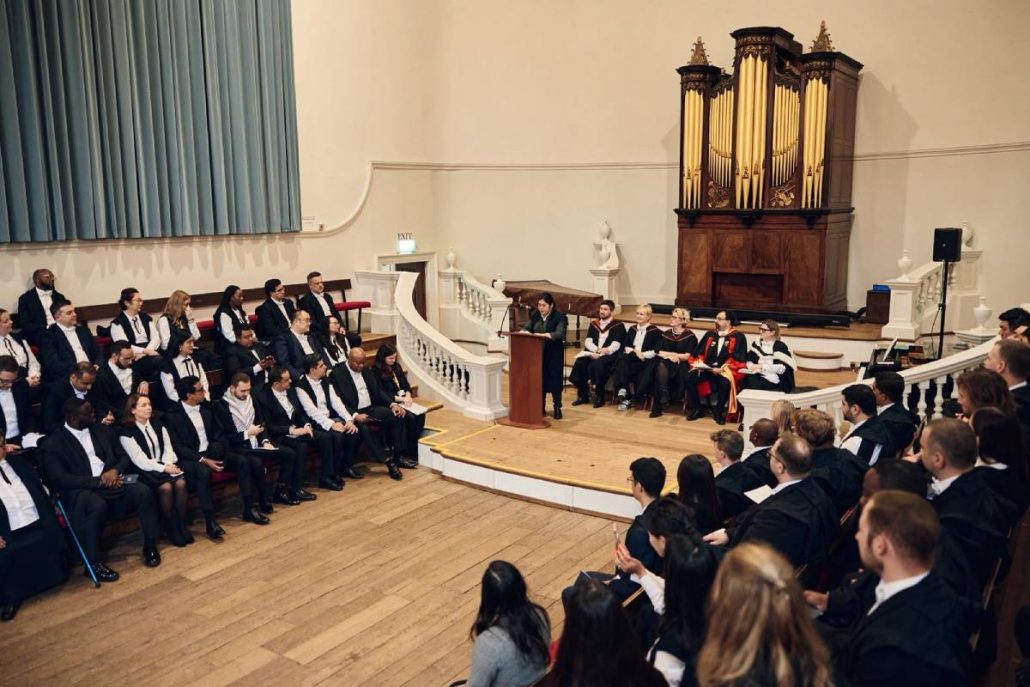
At the final ceremony for the MSc in Major Programme Management at Saïd Business School, held in the historic Holywell Music Room, Lamentillo addressed her classmates with a quiet confidence shaped by years of persistence. She spoke not just as a student, but as someone whose story began far from Oxford’s centuries-old traditions.
“For me, this moment is deeply personal,” she said. “English is not my first language. I am from the Karay-a ethnolinguistic tribe. I grew up with a speech defect. And the first book I ever had in English was an Oxford dictionary.”

It is a detail that captures the essence of her journey. Long before Oxford became a place she could inhabit, it was simply a word she encountered while learning a language that did not come easily. Growing up in a Karay-a-speaking community in the Philippines, English was something she had to work toward—carefully, deliberately, and often with difficulty.
“So to be here now, at Oxford, speaking on this ceremony today, is something I could never have imagined when I first struggled through English words,” she said. “It is a full-circle moment that humbles me deeply. A child who first encountered English through an Oxford dictionary is now graduating from Oxford.”
Her presence in that room carried meaning beyond her own story. The Karay-a, part of the broader Hiligaynon ethnolinguistic group in Western Visayas, remain underrepresented in global academic institutions. By naming where she comes from, Lamentillo made her heritage visible in a space where it is rarely heard.
“There is an extraordinary weight to graduating from Oxford,” she said. “Oxford is not just a university. It is a name that carries history, excellence, and expectation. For many of us, it was something distant, almost untouchable — something we admired from afar before we ever imagined we might belong to it. And yet, here we are.”
That sense of arrival, she made clear, was not the result of ease.
“Not because the road was easy, but because we kept walking it.”
Throughout her address, Lamentillo framed the experience of her cohort through resilience rather than prestige. Her perspective—shaped by her own background navigating language barriers and a speech defect—allowed her to recognise forms of courage that often go unseen.
“Because when I look at us, I do not just see achievement. I see bravery. Real bravery.”
She spoke of classmates who crossed borders amid conflict, who studied while managing businesses, caring for families, or carrying grief. For many, she said, the themes discussed in class were not abstract ideas.
“Because for most of the people in this class, crisis is not a case study. It is not an abstract concept. It is not a classroom exercise. It is not a framework on a reading list. It is something lived.”
Her words reflected a deeper understanding of what it means to persist—not just academically, but personally.
“Bravery is going home to a real life that is heavy, and then still returning to class,” she said. “Bravery is holding together two worlds at once: the world here, and the world waiting for us beyond Oxford.”
That duality mirrors her own journey: carrying the language, identity, and memory of her Karay-a roots while navigating one of the world’s most elite academic environments. Rather than separating the two, she holds them together.
Lamentillo also turned attention to the people behind each student’s success, grounding the moment in collective effort.
“This win is not just ours,” she said. “It belongs, too, to the people you are here with. To the families who waited. To the loved ones who encouraged. To the children who shared time. To the parents who sacrificed. To the friends who listened. To the communities that carried us when we were tired.”
Her speech ultimately returned to a message shaped by her own life experience—one that speaks directly to those who come from communities like hers.
“We are proof that belonging is not reserved for those with easy journeys. We are proof that language barriers do not define the limits of a voice. We are proof that struggle does not cancel brilliance. We are proof that courage is not the absence of fear, but the decision to continue in spite of it.”
For Anna Mae Yu Lamentillo, the final ceremony at Oxford was not simply the culmination of a degree. It was a full-circle moment rooted in identity—a Karay-a voice, once shaped in a small community in the Philippines, now heard clearly on one of the world’s most global stages.
“For me, this will always be a moment of gratitude,” she said. “What a full circle. What a privilege. What a brave class this is.”
Lamentillo received the Programme Director’s Prize at Oxford University during the final ceremony held at the Holywell Music Room for the MSc in Major Programme Management cohort at Said Business School.