ILOILO City now has another source of pride to showcase — a dignity booster and a symbol of progress worth embracing.
These are the newly redeveloped Iloilo Central Market (ICM) and Iloilo Terminal Market (ITM).
Both are historic public markets deeply woven into the heritage and identity of Iloilo City. The Iloilo Central Market was built in 1912, while the Iloilo Terminal Market rose after World War II.
But as far as I can remember during my years as a cub reporter for RMN dyRI-Iloilo from 1994 to 1996, the two markets were already far from pleasant to look at.
Dilapidated — that was the most fitting word to describe them.
Back then, the markets were best known for their “batchoyan” and “halo-halohan.” They also served as showcases of Iloilo handicrafts and local products.
However, when I visited both markets on May 15, I was genuinely stunned.
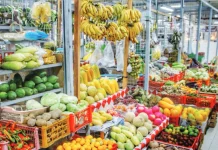
Today, both markets exude an astonishing aura, complete with components reminiscent of SM malls, making them truly peerless among public markets in the country.
What struck me the most was the cleanliness. Both markets are impressively tidy, orderly, and inviting.
PUBLIC-PRIVATE PARTNERSHIP
As I learned, the redevelopment of the Iloilo Central Market and Iloilo Terminal Market was made possible through a public-private partnership (PPP) between the city government and SM Prime Holdings, Inc. (SMPHI), one of Southeast Asia’s leading integrated property developers.
A PPP, in essence, is a collaborative arrangement between the government and the private sector, wherein the latter finances, designs, constructs, operates, and manages public infrastructure and services.
For these two markets, the PPP agreement reportedly spans 25 years, extendable for another 25 years.
According to Atty. David Abraham Garcia, head of the city’s PPP Division, Section 21 of the contract states that the lessee — SMPHI — will handle the operations, maintenance, and management of the mall sections of both markets.
Meanwhile, under Section 22, the lessor — the city government — remains responsible for the operations, maintenance, and management of the market sections.
In short, the city continues to generate income from the market sections through monthly stall rentals amounting to P420 for permanent vendors and P20 daily cash tickets for non-permanent vendors.
Contrary to earlier fears, the city government was never stripped of its authority over the public markets.
Maricel Mabaquiao, head of the city’s Local Economic Enterprise Department, also revealed in a phone interview that the city is targeting more than P100 million in market revenues this year because of the redeveloped facilities.
‘BENCHMARKING CAPITAL’
Since the reopening and blessing of the redeveloped markets in October last year, Mayor Raisa Treñas-Chu shared that the city has been receiving visitors almost every day from various local government units across the country.
These delegations want to see the markets firsthand and learn how Iloilo City successfully ventured into PPP.
Because of this, Mayor Raisa said Iloilo City has earned a new moniker — the “Benchmarking Capital” of the Philippines when it comes to PPP initiatives.
For the city’s lady mayor, the development still feels surreal.
Even she admitted that she never imagined how the redeveloped markets would transform Iloilo City’s economic and tourism narratives through what is now being called a “palengke tour.”
One thing she is certain about, however, is that the redevelopment of these two heritage markets has greatly boosted the morale and dignity of the Ilonggos.
‘DRAMA ARENA’
But before these uplifting developments came to fruition, the two markets had long been a “drama arena” filled with suspicion, fear, intrigue, and allegations that negatively affected the city government.
Rumors circulated that around 2,000 vendors would be displaced, stall rentals would skyrocket, and the city government would supposedly earn nothing from the markets for the next 50 years.
Yet then-mayor Jerry Perez Treñas never yielded to the stories spread by critics and naysayers.
Instead, he remained focused on his vision for the two heritage markets.
It was in 2022 when his administration conceptualized and pushed for the project. Despite intense opposition from several sectors, Treñas remained firm and unwavering.
He refused to be distracted by outside noise.
The reconstruction pushed through, and three years later, the results are now impossible to ignore.
‘BEAUTIFUL INHERITANCE’
Whether Mayor Raisa openly admits it or not, the redeveloped Iloilo Central Market and Iloilo Terminal Market form part of a “beautiful inheritance” from her father’s administration.
Her administration is now the beneficiary of that legacy.
Without the vision, courage, and persistence of former mayor Treñas, the redevelopment of the two heritage markets might never have materialized.
But Treñas was never an ordinary politician.
During his years as mayor, he invested heavily in discipline and cleanliness — qualities he believed were essential for a growing city like Iloilo.
Beyond legislation and public service milestones, he also understood how long-term planning and strategic thinking could shape the future.
The PPP for the redevelopment of the two heritage markets was worth P2 billion, with SMPHI serving as financier.
The city government, notably, spent nothing for the project.
Iloilo City also became the first highly urbanized city in the Philippines to redevelop two public markets through a PPP arrangement.
General Santos City followed suit through a partnership with Robinsons Land Corporation for the redevelopment of its public market into the P2.33-billion, solar-powered “Palengke Heneral.”
Meanwhile, Cebu City entered into an P8-billion PPP agreement with Megawide Construction Corporation for the modernization of the Carbon Public Market.
Among the three, however, Iloilo’s markets stand out because of their mall component — a feature that makes them unique.
INDELIBLE LEGACY
The two heritage markets, now integrated with SM mall components, are undeniably part of Treñas’ indelible legacy.
The former mayor fought hard for the project, endured public criticism, and weathered widespread opposition. In the end, however, he prevailed.
And that victory was not for himself, but for Iloilo City and the Ilonggos.
Credit, therefore, should be given where it is due.
Treñas proved himself to be a forward-thinking leader before retiring from politics in July 2025.
He understood what was best for Iloilo City and its people.
More importantly, he possessed what many leaders lack — strategic foresight.
He had the ability to see the bigger picture, anticipate future economic and societal challenges, and formulate long-term plans capable of generating wealth rather than draining resources.
Indeed, Treñas capped his 40 years in politics and public service “with a bang” through the successful redevelopment of the city’s two public markets.
‘SHREWD APPROACH’
Mayor Raisa, as the beneficiary of this remarkable legacy, is fortunate to have inherited such transformative projects from her father.
What she must do now is ensure that these markets — along with the other signature programs and projects initiated during her father’s administration — are properly maintained and sustained.
The markets must remain clean, orderly, and efficiently managed.
After all, these public markets-cum-SM malls have already become among Iloilo City’s newest tourism drivers and will undoubtedly occupy significant pages in the city’s history books.
Another revelation that truly surprised me was learning that all vendors from the two markets were enrolled in the city-run Uswag Negosyo Academy (UNA).
Through the academy’s eight-weekend program, vendors undergo training in financial literacy and marketing to help them adapt to the changing marketplace.
Mayor Raisa, regarded as the “brain” behind UNA, explained that she wants vendors themselves to level up alongside the redevelopment of the markets.
It is a development model where infrastructure and people grow together.
That, indeed, is a shrewd approach.
In the end, one can easily conclude that Mayor Raisa is truly her father’s daughter:
Simple.
Focused.
Bright.
Visionary.
Strategic.
Trailblazing./PN